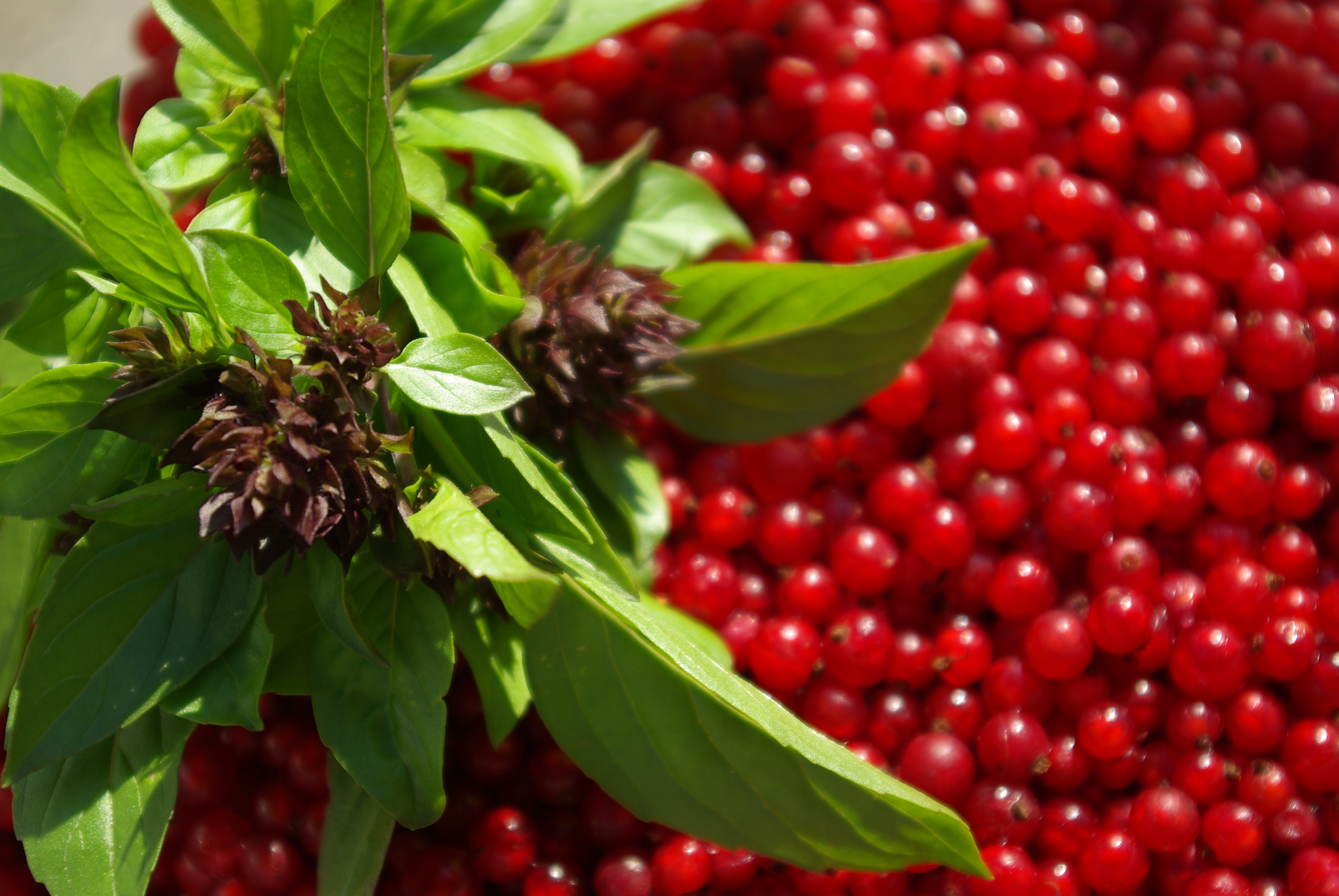
Red currant jelly is highly regarded in European cuisine and for righteous reasons. In the Lorraine region of France you’ll find the sought after bar-le-dec jelly which is specially prepared with currants that have been deseeded by an epepineuses. In other traditions red currant jelly is served with lamb and different meat dishes. I relish red currant jam and thats what I’ve been making the past few years. In fact I still have some jars stored away from last season’s crop. However this time I wanted to make jelly instead. To me jelly is a bit more of a ‘premium’ since the seeds and skins are removed and it takes considerably longer to make. I was looking to spice it up by adding a flavoring herb; I decided on Thai basil. This is one of my favorite basil varieties because I love its strong anise flavor and aroma. This needed to be a low-sugar recipe as I cannot buy into the ridiculous amounts of sugar suggested for most jam and jelly recipes. It would be an awful shame to mask the complex tartness of the currants.
Here’s what you’ll need for this simple recipe:
8 cups destemmed currants
1/2 cup water
1 1/2 cups organic cane sugar
1 handful of thai basil leaves and flower tops
2 tbsp powdered pectin
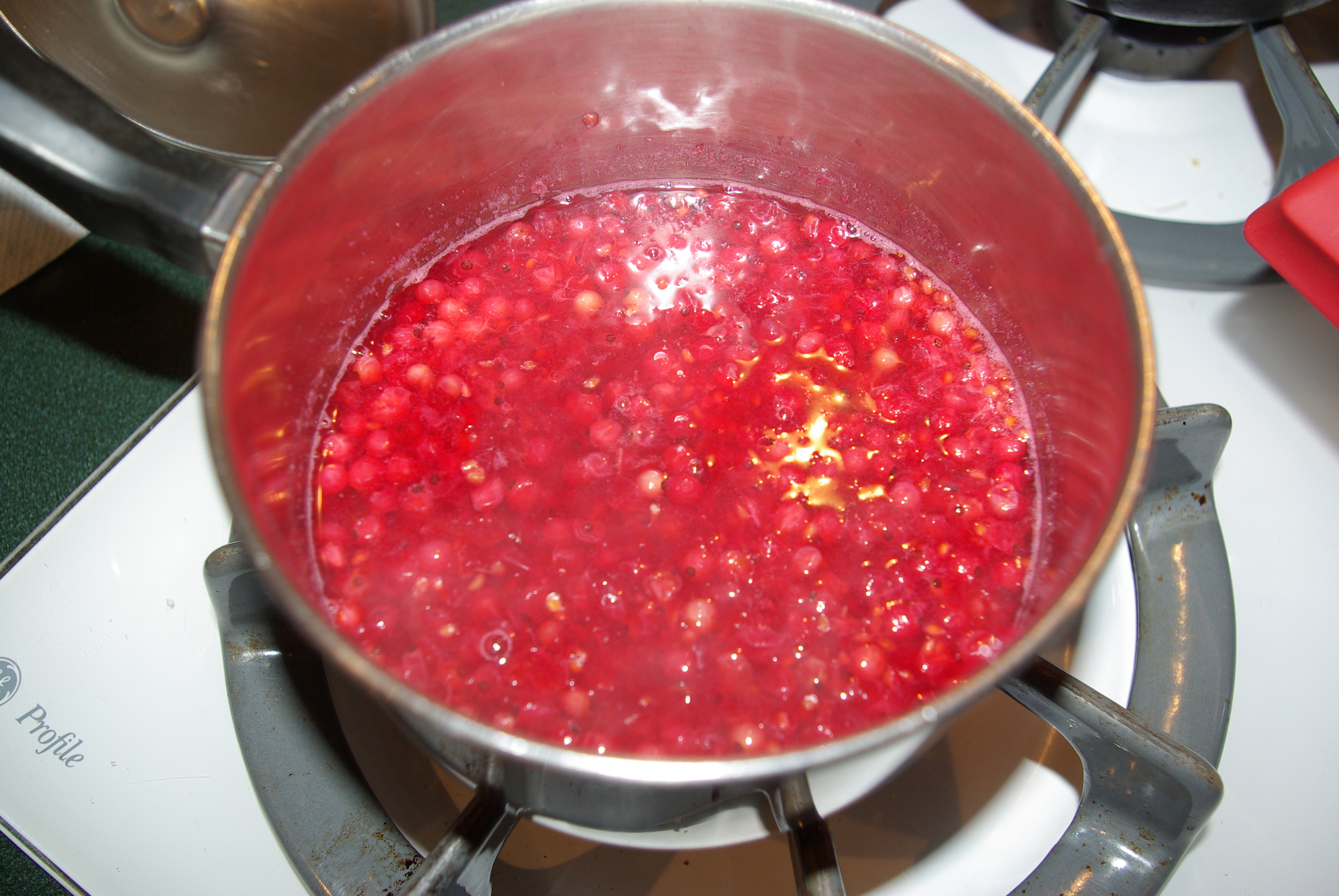
Step 1: Rinse currants and place in large sauce pan with 1/2 cup water. Crush currants with potato masher or berry crusher if you have one. Cook on medium heat for 10-15 minutes.
I added one whole sprig of basil at this stage to begin the flavor infusion…
Step 2: Strain the fruit through cheesecloth, jelly bag, or foley food mill to separate seeds and skins. I used a foley food mill and it worked wonders. Just don’t go all epepineuses on me and start removing seeds with the butt end of a feather!
Discard left over seeds and skins and add to compost…
Step 3: Add strained mixture back to sauce pan and dissolve sugar on medium heat. Add finely chopped Thai basil and let cook for 8-10 minutes.
Step 4: Bring to rapid boil and stir in pectin. Let boil for 1 minute and take off heat.
By now it should have jelled fairly well and will continue to as it cools. Fill jars and store in refrigerator or for long term storage place jars in boiling water bath for 15 minutes and then store in pantry.
The sweet anise flavor of Thai basil complements the tangy currants wonderfully! Yum…
After being gone for a few days up north I was disappointed to return and find my ‘Rovada’ red currants and ‘Primus’ white currants had almost entirely disappeared. I’d been waiting to harvest them at their peak ripeness, but apparently I waited too long and the birds beat me to it. Even with the red currants being haphazardly netted the birds still found a way to devour. Bummer. Can’t stress it enough when it comes to harvesting: TIME IS OF THE ESSENCE!
All that was left of my ‘Rovada’ and ‘Primus’ currants…those robins! 7/4/12
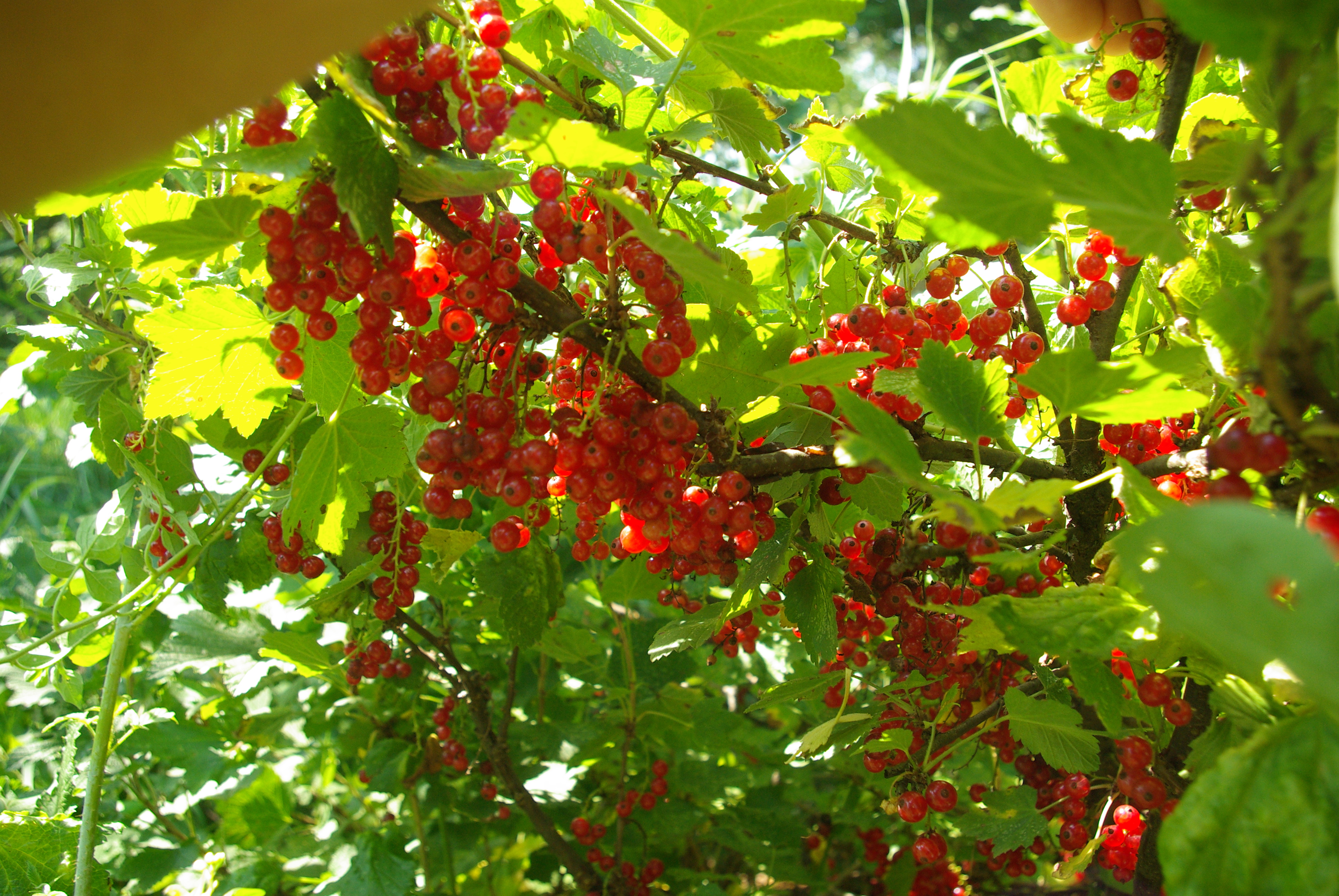
Fortunately mother nature had a back up plan and the local ‘U-Pick’ red currant put on a bumper crop which the birds haven’t bothered (yet). ‘U-Pick’ is a bush I found a few years ago at a friend’s house and have been trying to uncover it’s origin. It was planted some 27+ years ago by the previous homeowners. For not being pruned and fending for itself, she’s managed to produce a bountiful crop for the past several years. Stay tuned for an upcoming red currant jam recipe. In the meantime check out how my friend Mark has been using red currants in some gourmet fixins!
What I refer to as ‘U-Pick’ is an unknown cultivar of Ribes rubrum…possibly ‘Red Lake’ or ‘Red Dutch’? 7/6/12
Thankfully I was smart enough to pick the last of my ‘Pink Champagne’ currants before I went on my trip north. Otherwise they too would have been gone I suspect. Guests ate the currants and everyone enjoyed their sharp tanginess! I juiced the left over berries and mixed up a currant cosmopolitan with vodka, currant juice, lime, and a touch of sparkling water. Twas a lovely cocktail.
My not-so-pink ‘Pink Champagne’ currant harvest… 6/30/12Herbal tea infused with fresh red currants…about 95% of the taste tests were positive! 6/30/12
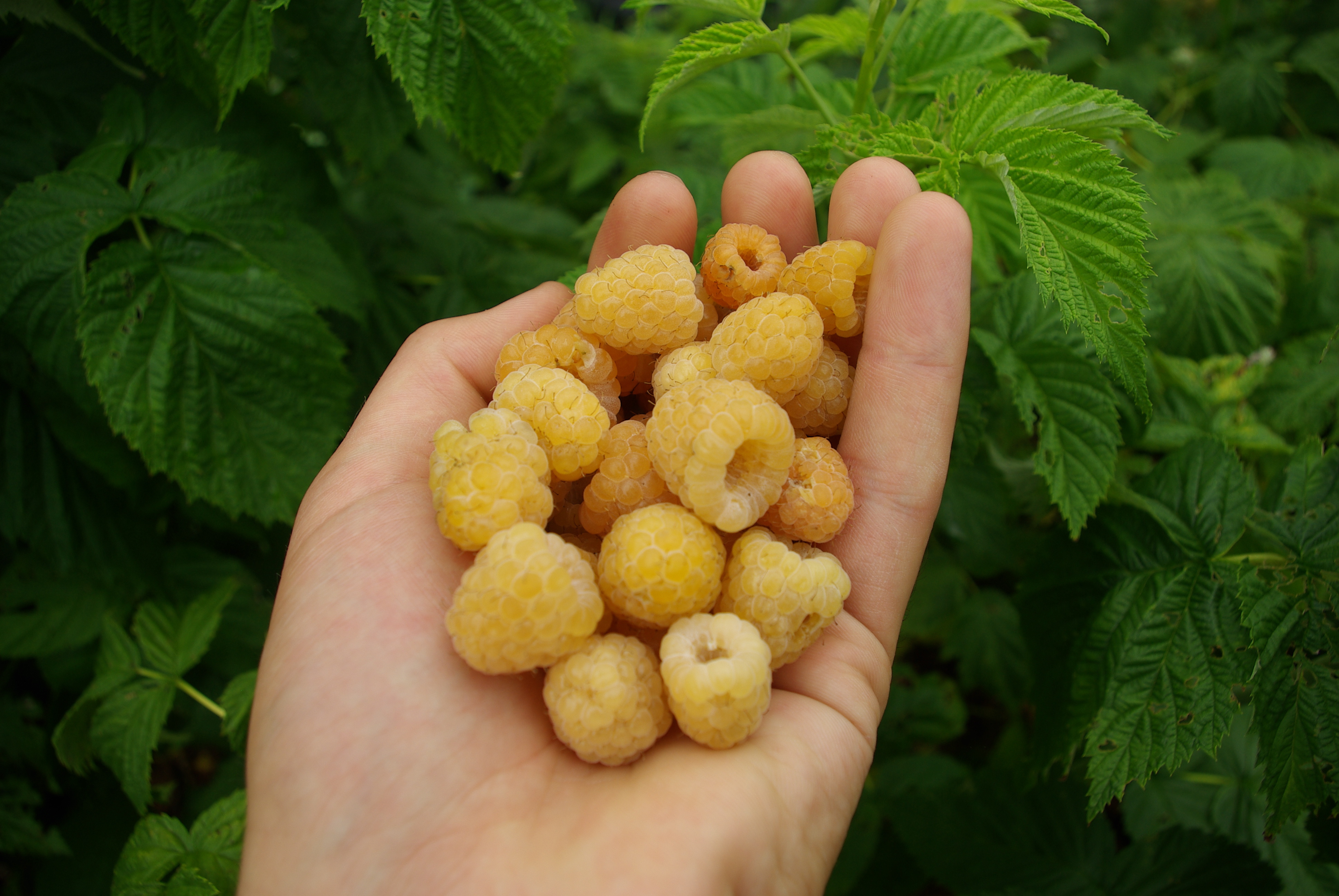
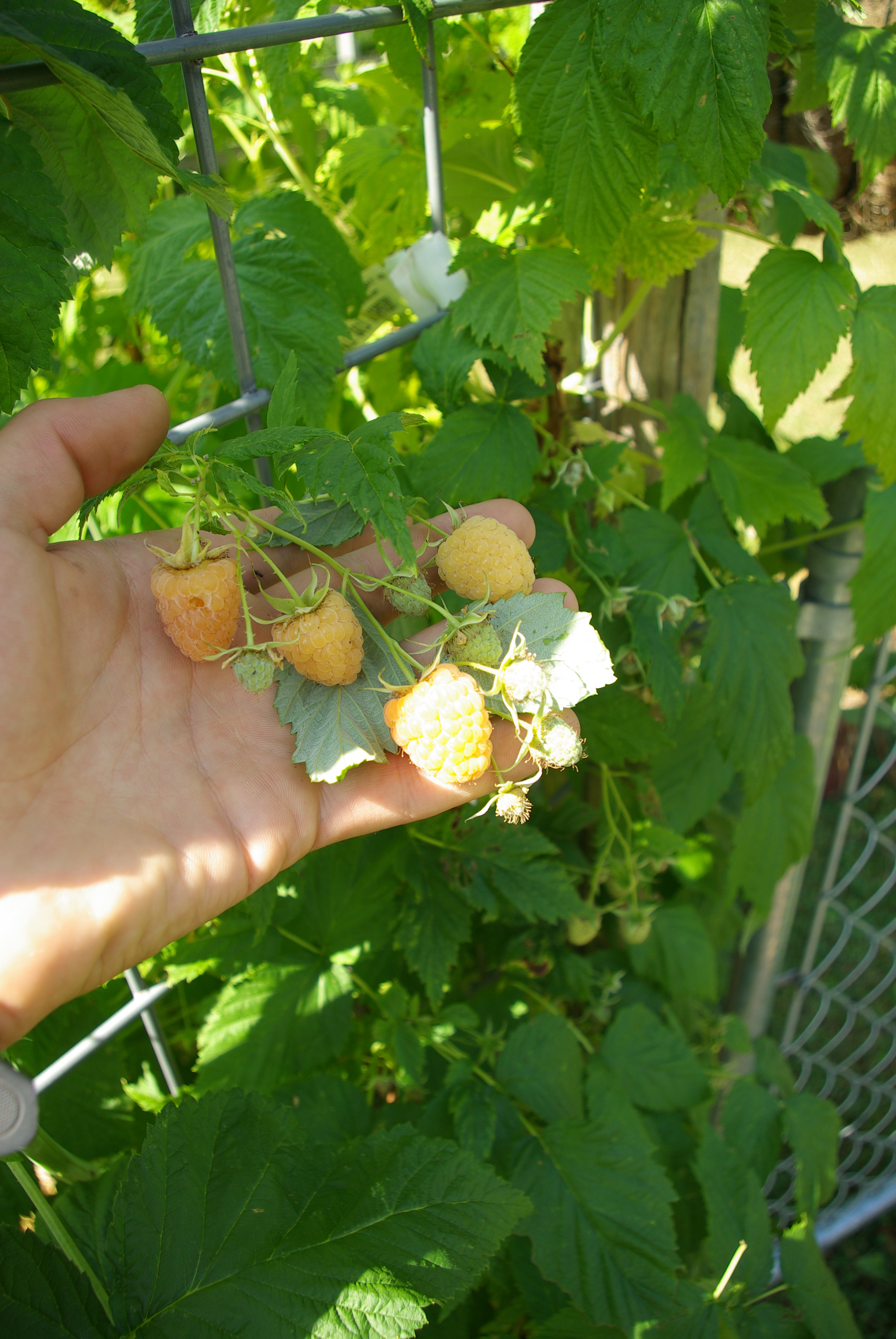
My everbearing golden raspberries are ripening their first flush of fruit for the season. I have been eating a generous handfull daily for the past week. There has been a lot of interest in golden raspberries at the Clarkston Farmers’ Market lately. Its always fun to show people an unusual version of a food they’re already familiar with.
‘Fall Gold’ raspberries have a delicate flavor with tropical notes and a rich honey-like sweetness. 7/4/12Golden raspberries and red currants spiraling atop damsons…
The black raspberry season has been unusual thus far; there appears to be a good fruit set but they’re taking their sweet time to ripen. So there has yet to be any golden opportunities to cash in on the harvest. However, when I was out looking the other day I came across a stunning patch of wild bergamot and some happy, happy bumble bees!!!
Monarda fistulosa AKA bee balm is a great nectar source for bees and other beneficial insects.
One of the biggest thrills yet has been the blueberry harvest. Highbush blueberries are ripe for the picking and I will dedicate an entire post to that SOON!
Walking the plank through the enchanted blueberry bog… 7/5/12
I went fishing the other day and caught some large mouth bass, bluegill, and crappie. We ended up catching a fair bit and I needed to figure out what to do with the fillets. I remembered hearing my friend who lived in Sweden mention that they’d pair red currants with meat dishes. Often making a sauce that would top the meat; traditionally it was elk or reindeer, but it would go great with grass-fed beef or venison I’d imagine. Red currants have the perfect acid flavor to go with savory meat dishes. Traditionally, in Sweden at least, they usually don’t put red currant sauce on fish…BUT I figured it was worth a try. Especially after harvesting a nice container full of wild red currants earlier that day.
Wild harvested American red currants…
I made dill battered fillets with garden giant mushrooms and topped it with a lovely red currant glaze and served it with quinoa. You can experiment with using this sauce on any number of poultry, fish, or meat preparations. Here is the recipe for the glaze:
1 cup red currants
1/2 cup water
1 tablespoon cider vinegar
1/4 cup organic raw honey
Step 1: Mix currants, water, and honey in medium sauce pan. Bring to a boil then let cook for 10 minutes on medium heat. Be sure to smash the berries to extract their insides into the mix.
Step 2: Turn off heat and run mixture through cheesecloth or fine strainer to seperate the seeds. I love to eat currants with seed and all but for this recipe I thought it’d be nice to not have seeds.
Step 3: Add strained mixture back into saucepan; add vinegar and simmer for 10-15 minutes or until sauce begins to thicken. Pour on top of your favorite poultry, meat, or fish. ENJOY!
I have reformatted the site so that the Blog page will consist of regular updates in regards to what I’m harvesting and doing in the garden/orchard. These will be journal style entries focused on getting info and photos out quickly and easily! I’ve also added an Articlespages to the main menu; there you will find an archive of more in depth essays and tutorials. Hopefully this new format makes it conducive for me to post more frequently. I am doing this for the sake of my followers and for my personal satisfaction of being able to look back and see what I was doing when. Enjoy the new layout and if you have any suggestions, then please pass ’em along!
The heat of summer is in full swing, and the berry season is starting to pick up. With such a strange winter and spring the ripening times aren’t ‘normal’, or more accurately aren’t as they’ve been in years past. With that being said, tis the season for berry picking! Take it when it comes and do your darndest to best utilize mother nature’s abundance of nourishing and tasteful summer fruits! I’ve been doing just that…
Several days ago on a bike ride with my friend Paris Rae, we came upon a lovely patch of Ribes odoratum, or clove currant. This is a black currant species indigenous to NA with large, shiny black berries that are highly aromatic with a wonderful spicey-sweet flavor. A truly delectable roadside find!
Antioxidant-rich clove currants…Clove currant gets it’s name from the profuse, clove-scented flowers which perfume the air in early spring. A few years ago I found this large and in charge specimen LOADED with flowers, once again on a roadside…
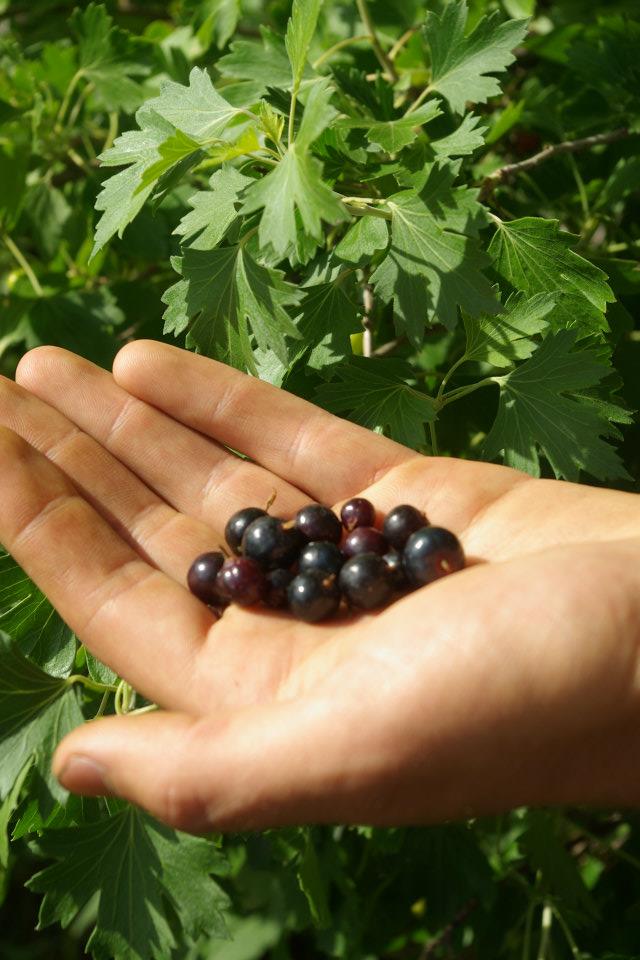
For the past 3-4 weeks I’ve been consuming plenty of European black currants (Ribes nigrum) of which I absolutely indulge upon and relish their complex ‘foxy’ flavor! Five varieties grow in my garden which all ripen at slightly different times, and today I picked the last of ’em from ‘Consort’. The bushes hold onto to their fruit quite well for the duration of picking season, which is a nice characteristic. This cannot be said for softer fruits like raspberries. I was meaning to make a batch of black currant jelly, but instead ended up eating them all fresh out of hand and mixed in salads. I love to let visitors try the black currants and observe their reaction. Most people enjoy them.
Handful of mixed black currant varieties.
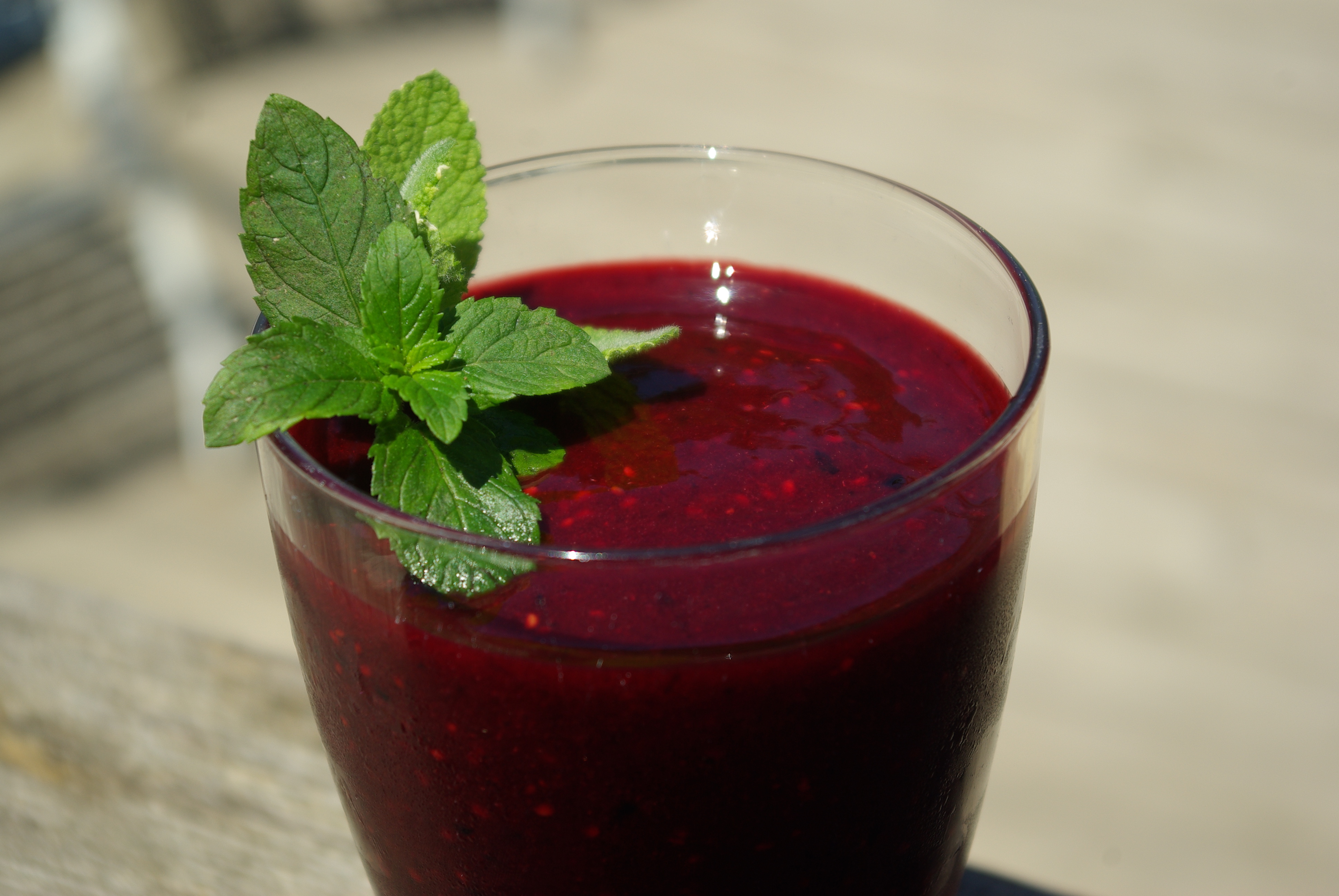
On hot days like today I like to make a refreshing iced berry drink. Today I made one with black currants. It is a simple recipe and you can alternate black currants with any other berry. This is all you’ll need:
1 cup fresh berries
1 cup crushed ice
A spoonful of organic raw honey never hurts
I use a magic bullet with the heavy duty blade; you can use a blender, vita-mix, or whatever you’ve got! Mix the ingredients and blend. Sometimes you’ll need to add a small amount of water or other liquid to get the blending started.
I like to add a few sprigs of fresh mint! Yum…
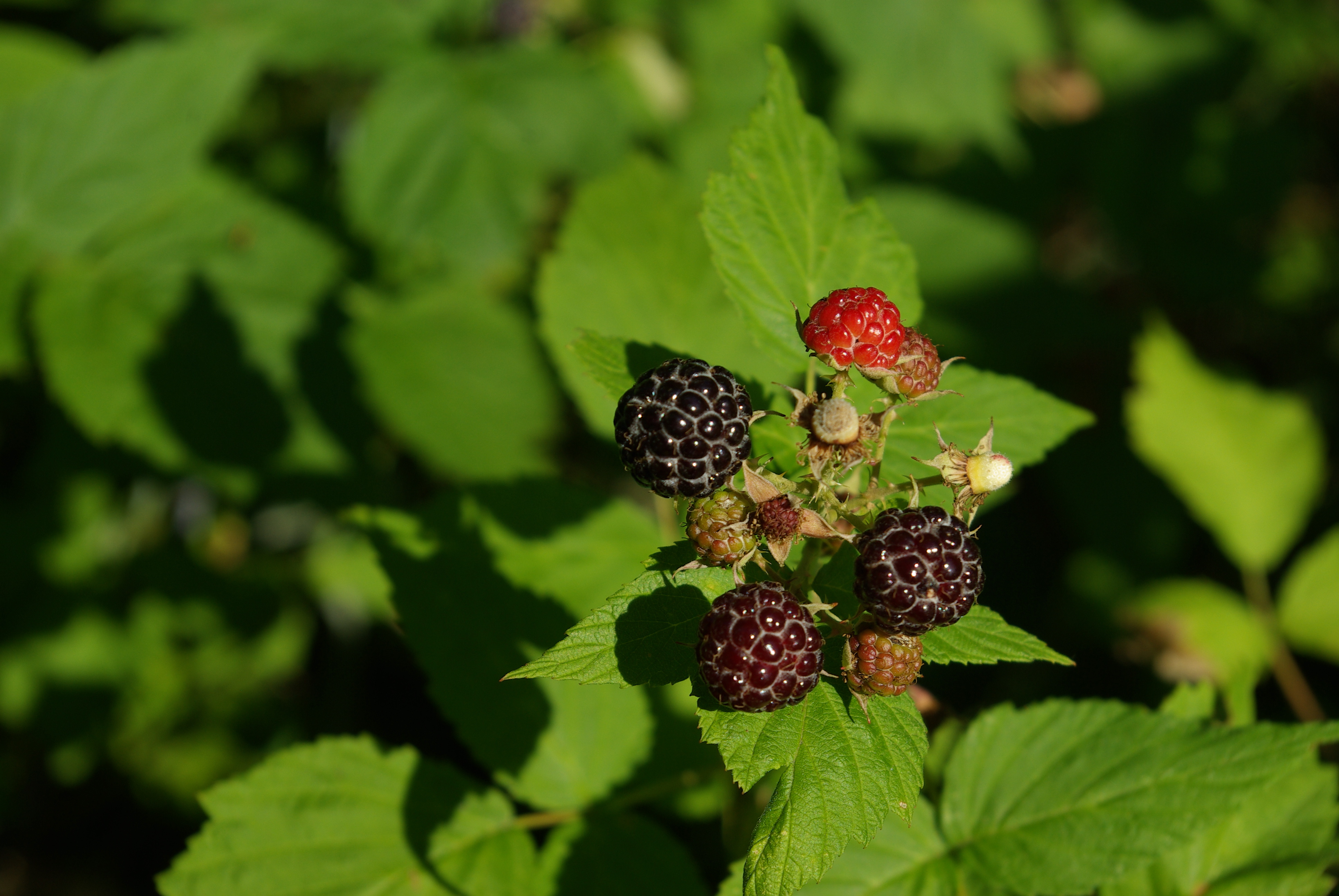
Blackcaps, or black raspberries, are reaching their peak season. They happily grow wild around here and if you know a good spot then there is usually never a shortage of berries. I like to freeze them for use in pies and smoothies during winter. They also make a delicious low-sugar jam.
Black raspberries at different stages of ripening…In just a short period you can collect a considerable amount of black raspberries. They go well with oatmeal in the morning!
I expect the next two weeks to be the ideal time to collect a lot of these gems for freezing and preserving. Once you familiarize yourself with these fruits you’ll learn that its all about timing and it surely pays to keep a close eye on whose ripening!
A subtle mutation gives these black raspberries a golden color. This was exciting to find growing wild around here, somewhat of a rarity.Interestingly enough golden fruited variants often times express golden tinged foliage and stems. For breeders and selectors this is one way to tell if you might have a golden-fruited specimen before fruiting occurs. As the wood lignifies on these black raspberry floricanes it too gains a yellow hue.
In my garden it is an ‘in-between’ year for strawberries. My strawberry bed was renovated this spring so it won’t be in production again until next year. Fortunately I have a lot of alpine strawberries still producing. Alpine strawberries are the wild european strawberry. Similar to the woodland strawberries you find growing here. Small fruit that packs a serious punch. Red and white-fruited varieties exist and their everbearing tendency keeps fresh berries comin’ all season! The ones in the image below were picked from a local edible landscape installed by Roots To Fruits. Stay tuned for a coming article on alpine strawberries
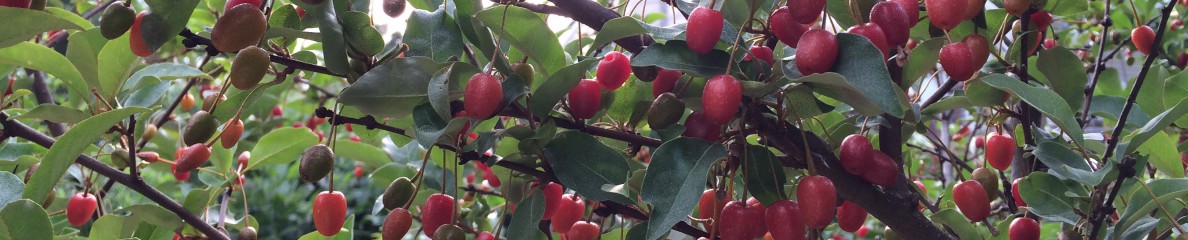
These ‘White Soul’ alpine strawberries have a pineapple-like flavor and are extremely sweet.These clove currants were intentionally planted in this edible landscape with alpine strawberries.A better view of the edible landscape featuring alpine strawberry, clove currant, and birds foot trefoil (a nitrogen-fixing groundcover).Speaking of white and golden fruits, my golden raspberries are just starting to ripen their first flush of berries. These are a real treat…still a week or two off from any substantial harvest.
One of the nice things about white-fruited berries vs. red,purple/blue hues is that they appear to be less noticeable to birds. Birds tend to recognize red and purple as something to go for where white and yellow, from my experience- are left alone. White alpine strawberries and golden raspberries are great from that regard. Another nice white-fruited berry is white currant. Technically white currants are just a variant of red currant (R.rubrum). I have a few varieties in my garden and most of them are all gone by now as they ripen much faster then reds(which are just starting to ripen). However a later ripening variety by the name of ‘Primus’ lives in my garden, and she is just now starting to ripen her berries(no currants are not dioecious!).
‘Primus’ has firm berries which ripen evenly and rate high in flavor and productivity…My espaliered ‘Pink Champagne’ currant is covered with ripe fruit right now. They dangle in clusters like little jewels with the sun shining through them! Beauty…Although this plant was labeled as ‘Pink Champagne’ when I got it four years ago, I have suspicion that it was mislabeled as the berries never really turn fully pink. Hmm…
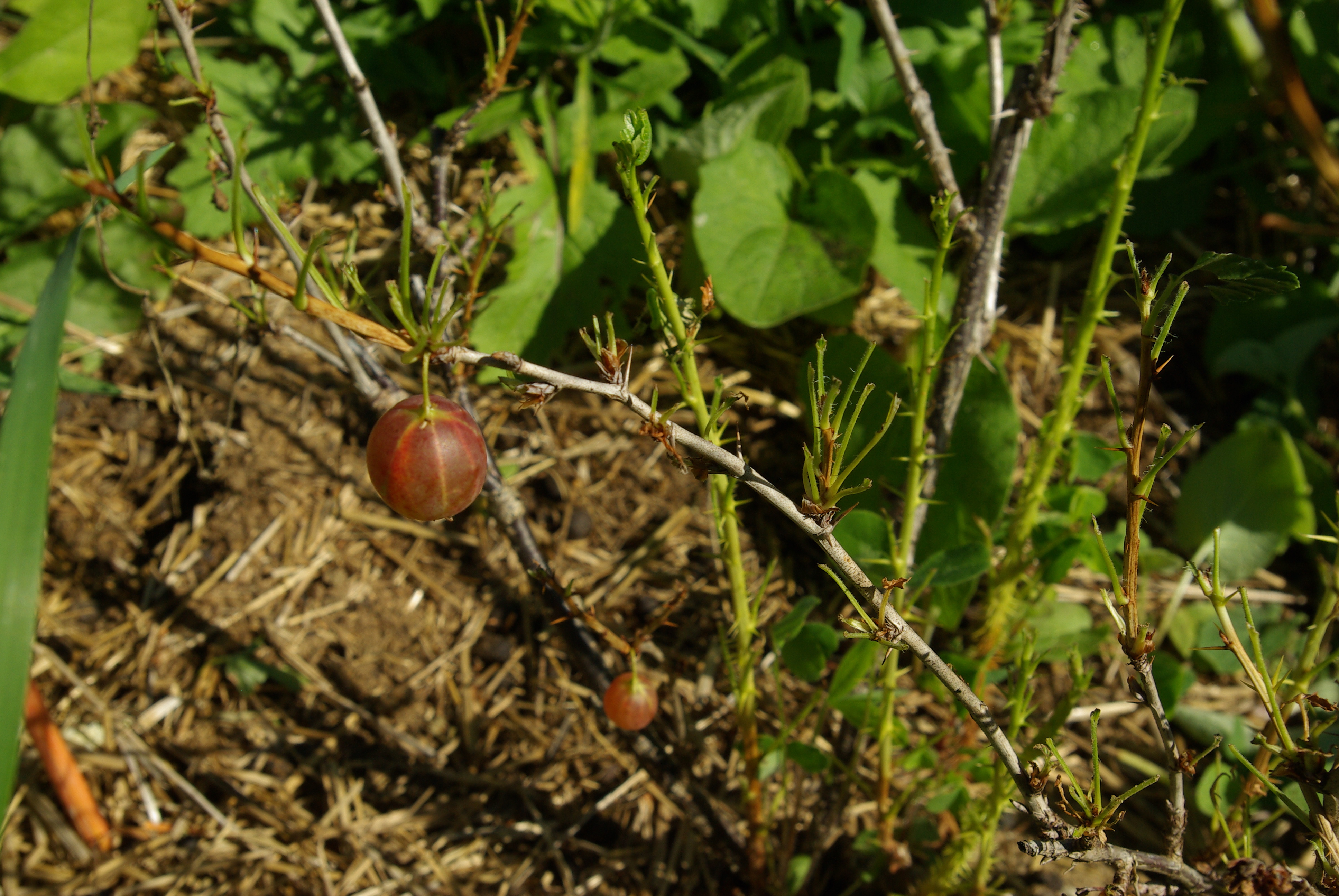
It has been a sad season for my gooseberries. I set out nearly 15 new bushes this year and they’ve had a rough go thus far. But its mainly my fault. They were planted in an area where horses and deer live and apparently the fencing system was not adequate. Aside from being trampled on a few times, there’s also been a serious outbreak of small green worms which defoliate a plant in a number of days. Not sawfly, still needs ID. If anyone knows please share.
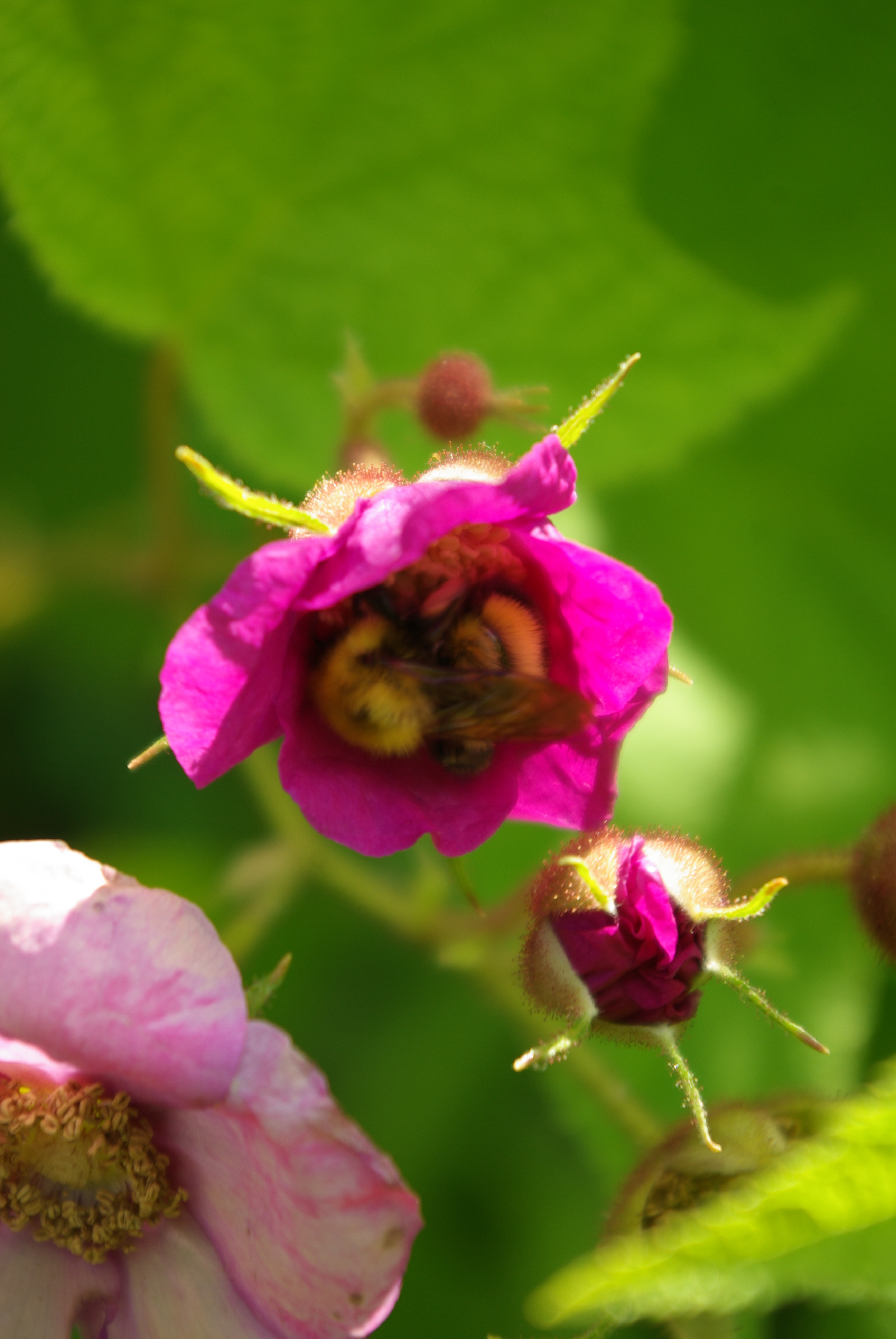
Ripe gooseberries…but whats missing? FOLIAGE…yikes!On a better note, about 95% of this seasons apple grafts have successfully took and are putting on oodles of new growth!My ‘Frontenac’ grape vine wasn’t phased by the shifty spring weather. Nice fruit set…BUT, the foliage is covered with these Japanese beetles…yikes.Wild hazelnuts growing on the side of a dirt road…lets see if we can get them before the squirrels!Beautiful image of bumble bee ecstatically burrowed within a purple-flowering raspberry blossom…
Comfrey is a plant with a multitude of uses not only in the home apothecary but also in the garden. There are several species in the genus Symphytum, all of which merit special attention, but generally S. officinale, or common comfrey, and a hybrid species S.x uplandicum are most often used. The ladder of which is particularly suitable for the home garden because it is sterile and doesn’t spread by seed. The most available variety is called ‘Bocking 14’. These are upright comfreys which can grow 5′ tall. There are also rhizomatous species which only grow 6″-1′ high and spread to form a dense groundcover.
Comfrey is prized amongst herbalists for its incredible healing powers. Comfrey leaves and roots
Comfrey leaves and roots chopped for making an herbal salve.
contain a high concentration of allatoin– a substance that speeds cell renewal. It got the colloquial name ‘knitbone’ for its use in treating wounds and reducing inflammation from broken bones and sprains. It’s not a surprise that comfrey fulfills a similar ecological niche working to heal wounded and degraded soils. Comfrey is referred to as a mineral accumulator or dynamic accumulator for its ability to mine nutrients with its deep roots (which also loosen compacted soils). Those nutrients are then deposited in the aerial parts of the plant; being especially high in potassium, phosphorus, calcium, and nitrogen. When the aerial parts die back in the fall those nutrients assimilate into the surrounding soil. Gardeners can facilitate this process by intentionally cutting the plant down at strategic times for use as mulch around fruit trees, berry bushes, or in the veg garden. In the permaculture world we
Close up showing comfrey mulch around trunk of tree.Comfrey mulch chopped around the base of a young peach tree.
refer to this process as ‘chop-n-drop’. Plant comfrey at the base of your fruit trees and simply chop-n-drop the material right in place; breaking the leaves and stalks into smaller pieces will accelerate decomposition but is not necessary. This is an effective way to build topsoil rapidly and reduce off-site inputs. From my experience I’ve been able to get anywhere from 3-5 cuttings throughout the season. One fella recently told me he cuts his back 7-8 times! I like to wait for the first flush of flowers in early summer because they provide excellent bee fodder.
Preparing comfrey tea brew.Finished comfrey tea will be slimy on top. Discard slimy material and use as mulch or add to compost.
Another strategy for utilizing comfrey’s amazing mineral accumulating capacity is to brew a fermented comfrey tea. This is a very easy procedure which entails chopping up a few handfuls of comfrey leaves and placing them in a 5 gallon bucket with water. Cover with a lid and let the mixture ferment outdoors for 1-2 weeks. Alternatively, start the batch by pouring boiling water over the plant material and letting it steep for a few hours then adding room temp. water to fill the rest of the bucket. The hot water method seems to extract more of the nutrients. You will know its ready when it has a strong stank…a good stank! Apply with a backpack sprayer diluted or undiluted. This fermented tea can be used a foliar feed or applied directly to the soil.
‘Dwarf Yellow’ comfrey
I grow comfrey around my compost bins and periodically add it to new piles or existing piles to jump-start the decomposition process. I also like to think that the comfrey roots capture any leached nutrients from the compost pile. One reason some people bash on comfrey is because its nearly impossible to get rid of as the tiniest piece of root will put on adventitious buds and sprout into a new plant. Easy to propagate? Ooooh yes! Aside from comfrey’s amazing medicinal qualities and numerous garden uses, it is also a very beautiful plant that can tolerate almost any soil type and will grow well in partial shade. Some ornamental varieties include ‘Goldsmith’, ‘Hidcote Blue’, and ‘Dwarf White’. I would love to hear how you’re utilizing comfrey in your garden! Cheers.
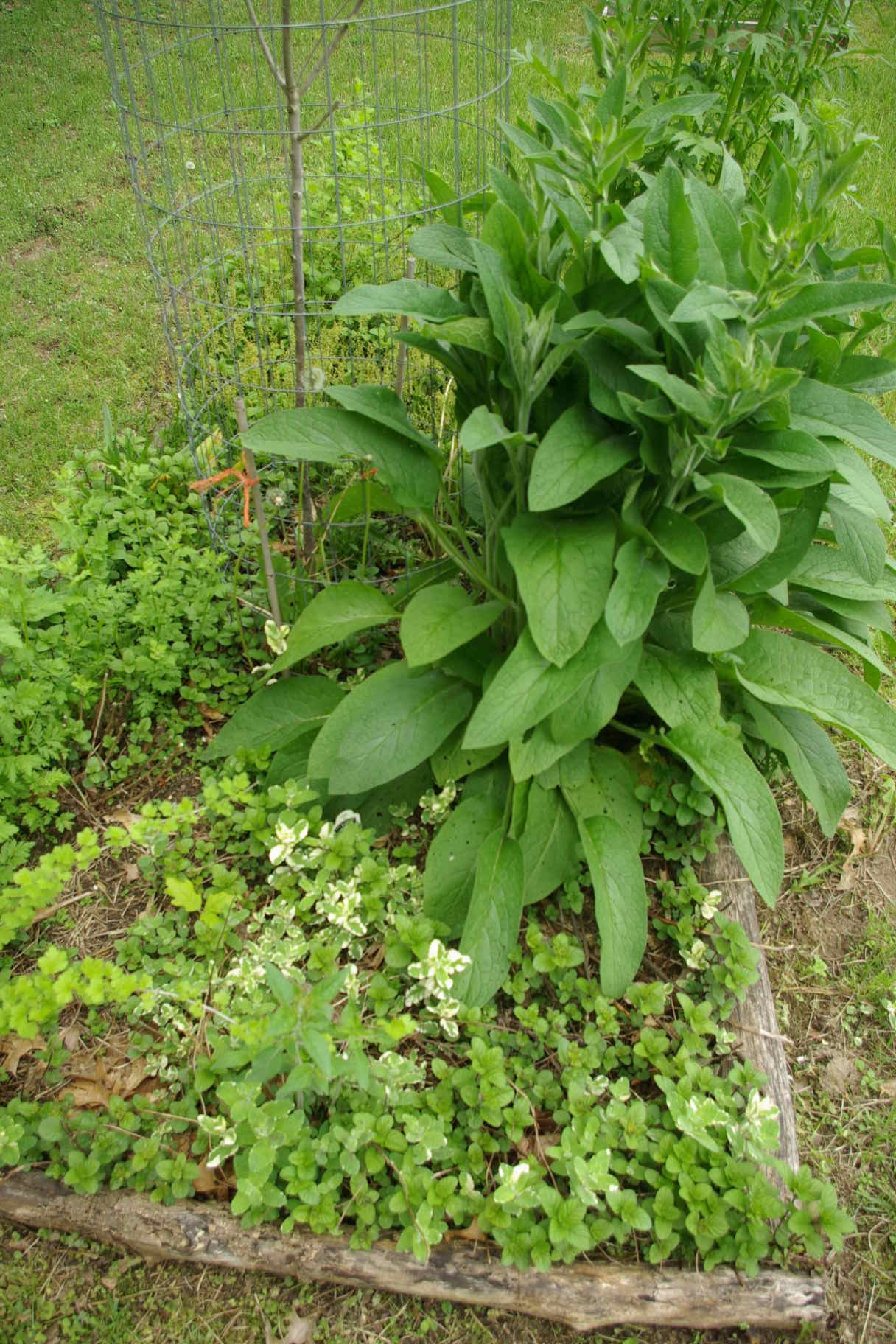
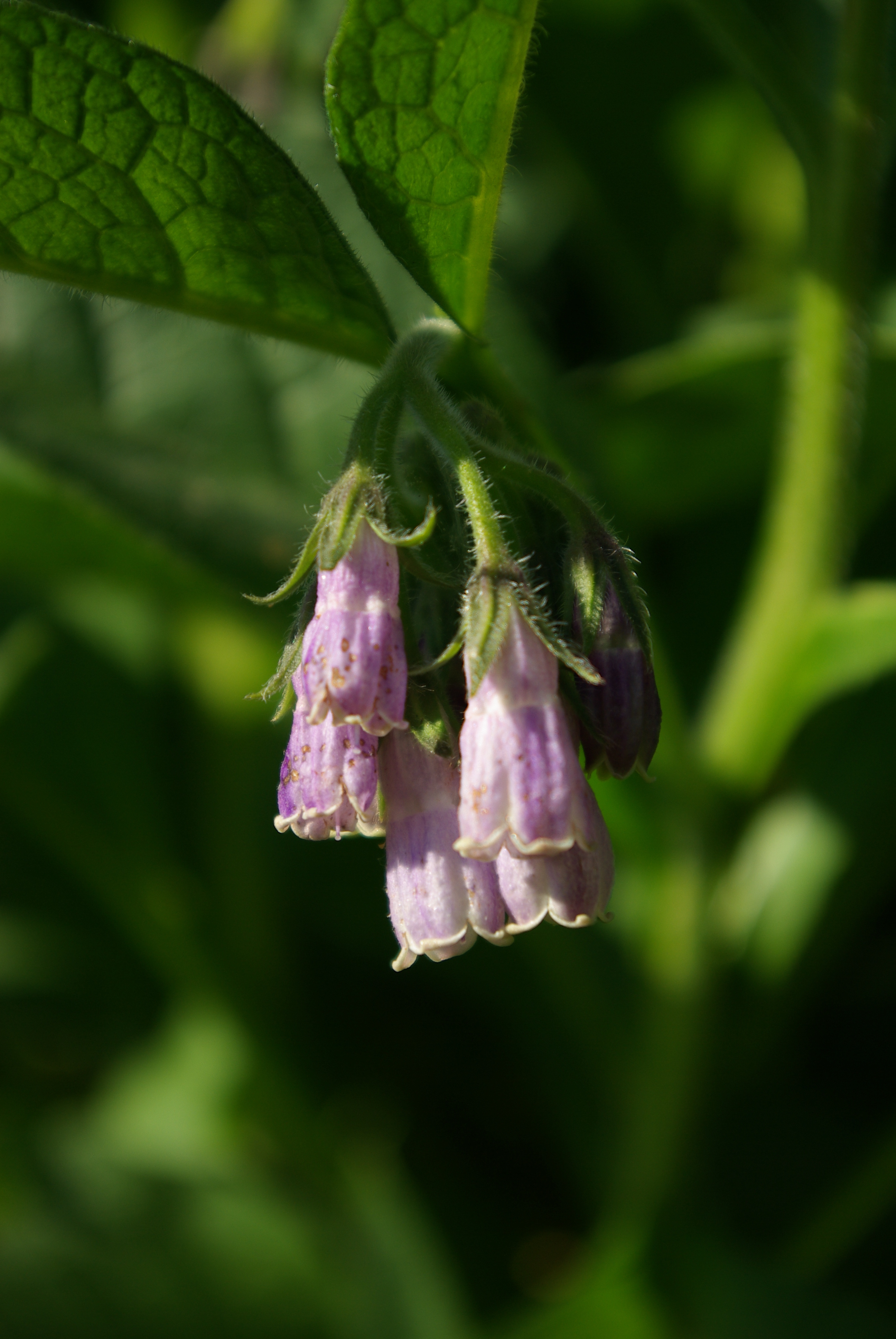
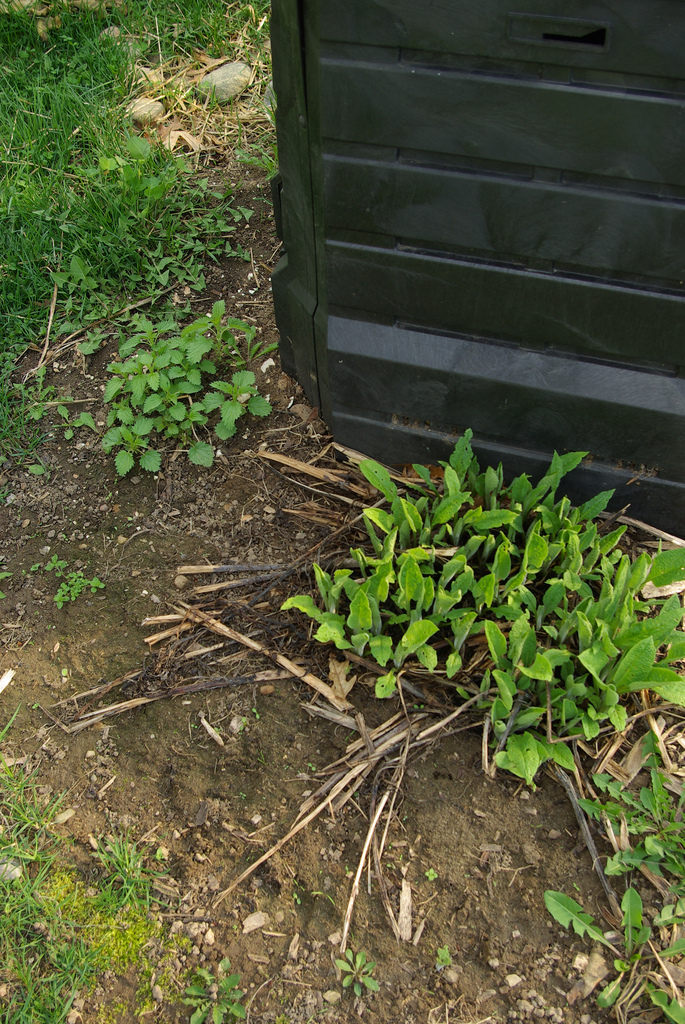
Since adolescent pawpaw trees require dappled shade, comfrey is a great multipurpose companion.Comfrey and mint at base of young persimmon tree.‘Bocking 14’ comfrey flowersComfrey showing itself in early spring by a compost bin.
I first learned of Cudrania tricuspidata aka Chinese mulberry, or CHE, several years ago when reading Uncommon Fruits For Every Garden by Lee Reich. Most midwesterners are familiar with osage orange, which was commonly planted as a living fence on old farmsteads. Its relative che, however, differs in that it produces an edible fruit which resembles the brain-like fruit of the osage orange, but is about 3-4x smaller and a pinkish-salmon color. Being a nut for exotic and unusual fruits, I had to get a che tree growing in my orchard. And so I did. Three years later its about 6-7′ tall and has yet to bear. I patiently await the day I can finally taste the mysterious che fruit! I have heard different reports in regards to flavor, but some claim it tastes like a mixture of watermelon and fig. Yum…
Michael McConkey of Edible Landscaping is one of the few nurserymen to sell che trees. Here is a great video of Michael with his seedless che tree:
Keith Johnson of Permaculture Activist wrote an informatve article on che a few years ago. After revisting his article I thought it’d be a good idea to share it. So here it is:
Che, eh? Mmmm. Nom nom.
By Keith Johnson
This odd fruit, Cudrania tricuspidata (which in this image seems under ripe or a different variety than mine), is presently (Fri Sept 5, 09) yielding (finally) beautifully, abundantly and deliciously in my USDA Zone 6a-b ridge-and-valley landscape in Southern Indiana (a quarter century ago it used to be Zone 5) in heavy clay and (this year) a wet season (with a three week drought in late Aug through recently). It seems to be resistant to pests, the birds have tasted it (must observe more) and there are at least 200, inch-to-inch-and-a-half, fruits with about half of them ripe at the moment. About 50 taste testers at recent party said it reminded them “melon”, “mulberry” and “fig” (it is related to the latter two) and generally enjoyed it. It’s six years old, was transplanted here from W. NC, three years ago, and it lived at least its first year in a pot. I’d say that indicates sturdiness.My thornless cultivar is grafted onto an Osage orange seedling. I recommend it highly. You can buy it (where I did) at Edible Landscape in VA.
Moraceae; Common Names: Che, Chinese Che, Chinese Mulberry, Cudrang, Mandarin Melon Berry, Silkworm Thorn.
Distant Affinity: Breadfruit (Artocarpus altilis), Jackfruit (A. heterophyllus), Fig (Ficus spp.), Mulberry (Morus spp.), African Breadfruit (Treculis africana).
Origin: The che is native to many parts of eastern Asia from the Shantung and Kiangson Provinces of China to the Nepalese sub-Himalayas. It became naturalized in Japan many years ago. In China, the leaves of the che serve as a backup food for silkworms when mulberry leaves are in short supply. The tree was introduced into England and other parts of Europe around 1872, and into the U.S. around 1930.
Adaptation: The che requires minimal care and has a tolerance of drought and poor soils similar to that of the related mulberry. It can be grown in most parts of California and other parts of the country, withstanding temperatures of -20° F.
DESCRIPTION
Growth Habit: The deciduous trees can eventually grow to about 25 ft. in height, but often remains a broad, spreading bush or small tree if not otherwise trained when they are young. Immature wood is thorny but loses its thorns as it matures. Female trees are larger and more robust than male trees.
Foliage: The alternate leaves resemble those of the mulberry, but are smaller and thinner and pale yellowish-green in color. The typical form is distinctly trilobate, with the central lobe sometimes twice as long as the lateral ones, but frequently unlobed leaves of varied outlines are also found on the same plant. As the plant grows, the tendency seems towards larger and entire leaves, with at the most indistinct or irregular lobing. The general form of the leaves comprise many variations between oblong and lanceolate. The che leafs and blooms late in spring–after apples.
Flowers: The che is dioecious, with male and female flowers on different plants. Appearing in June, both types of flowers are green and pea-sized. The male flowers turn yellow as the pollen ripens and is released, while the wind-pollinated female flowers develop many small stigmas over the surface of the immature fruit. Male plants occasionally have a few female flowers which will set fruit.
Fruit: Like the related mulberry, the che fruit is not a berry but a collective fruit, in appearance somewhat like a round mulberry crossed with a lychee, 1 to 2 inches in diameter. The ripe fruits are an attractive red or maroon-red color with a juicy, rich red flesh inside and 3 to 6 small brown seeds per fruit. The flavor is quite unlike the vinous quality of better mulberries. While still firm they are almost tasteless, but when fully soft ripe they develop a watermelon-like flavor that can be quite delicious. The sugar content is similar to that of a ripe fig. In colder areas with early leaf drop the bright red fruit are an attractive sight dangling from smooth, leafless branches.
The month of March is concluding; and it was a wild one at that. Global warming, or more accurately ‘global weirding’, is not only evident but now fully apparent after a winter with record low snowfall and unusually high temperatures. Earlier this month there were two weeks of unseasonably warm 70 and 80 degree weather, yes 80 degrees in March. The common folk may relish in this warmth, but any gardener, farmer, or orchardist
Frost on lemon balm after two weeks of 70-80 degree temps.
understands the multitude of implications. One night last week the temps dipped down into the high twenties. Whats wrong with that, those are usual March conditions, right? Well yes, but remember that two week period of 70 and 80 degree temps? Those warm days triggered local flora to ‘go for it’…inducing extremely early blossoming and bud break on many trees. Some of these trees being cornerstones for local economies. Stone fruits(peaches,plums,cherries,etc.) were particularly premature in blooming. Their blossoms are very tender and cannot withstand frost. There you have it, confused trees put out flowers and then got zapped by the cold. The cherry industry in the Traverse Bay area took a hard blow; a friend reports that the entire crop for 2012 could be in the red…except not with plump, juicy cherries! Another reason not to put all your eggs in one basket. The only potential saving grace for these cherry farmers is the fact that the high winds associated with the cold temps inhibit frost from settling. Conventional farmers combat this with giant fans or ‘smudge pots’ (oil burning devices used to increase air temps ever so slightly) throughout the orchard. However, for most small farmers this is too costly and labor intensive. On a home scale it is much easier to protect plants from frost. Simply draping a tarp or blanket atop vulnerable specimens will help to prevent frost contact. The hardy kiwi vines in my garden did not appreciate the frost. They didn’t have flowers but they had leaves. Key word ‘had’. Even with protection the leafed-out hardy kiwi vines could not take the cold temps. Fortunately they will happily leaf out again when the conditions become favorable. Fingers are crossed that the apples will be okay. Some varieties are at
Some apple buds already at the pink stage. 3/28/12
the tight cluster or pink stage which means flowers could open up any day. We’re not in the clear yet. A year with no cyder would be a shame indeed, but who knows maybe it will be just as bountiful a season as last for apples. Another factor that influences successful fruit set is the presence of pollinators. Under cold temps most pollinator species haven’t become fully active yet. Even wild edibles like stinging nettle and cattail are way ahead of their normal growth cycle. Fortunately there isn’t nearly the risk with these guys. The wise gardener knows not to put out tomato seedlings because one week of 70 degree temps in March. This would be foolish. However, I did take a risk by direct seeding some bush beans in my greenhouse during the warm spell. Hopefully they’ll be okay. Not much to lose there, though.
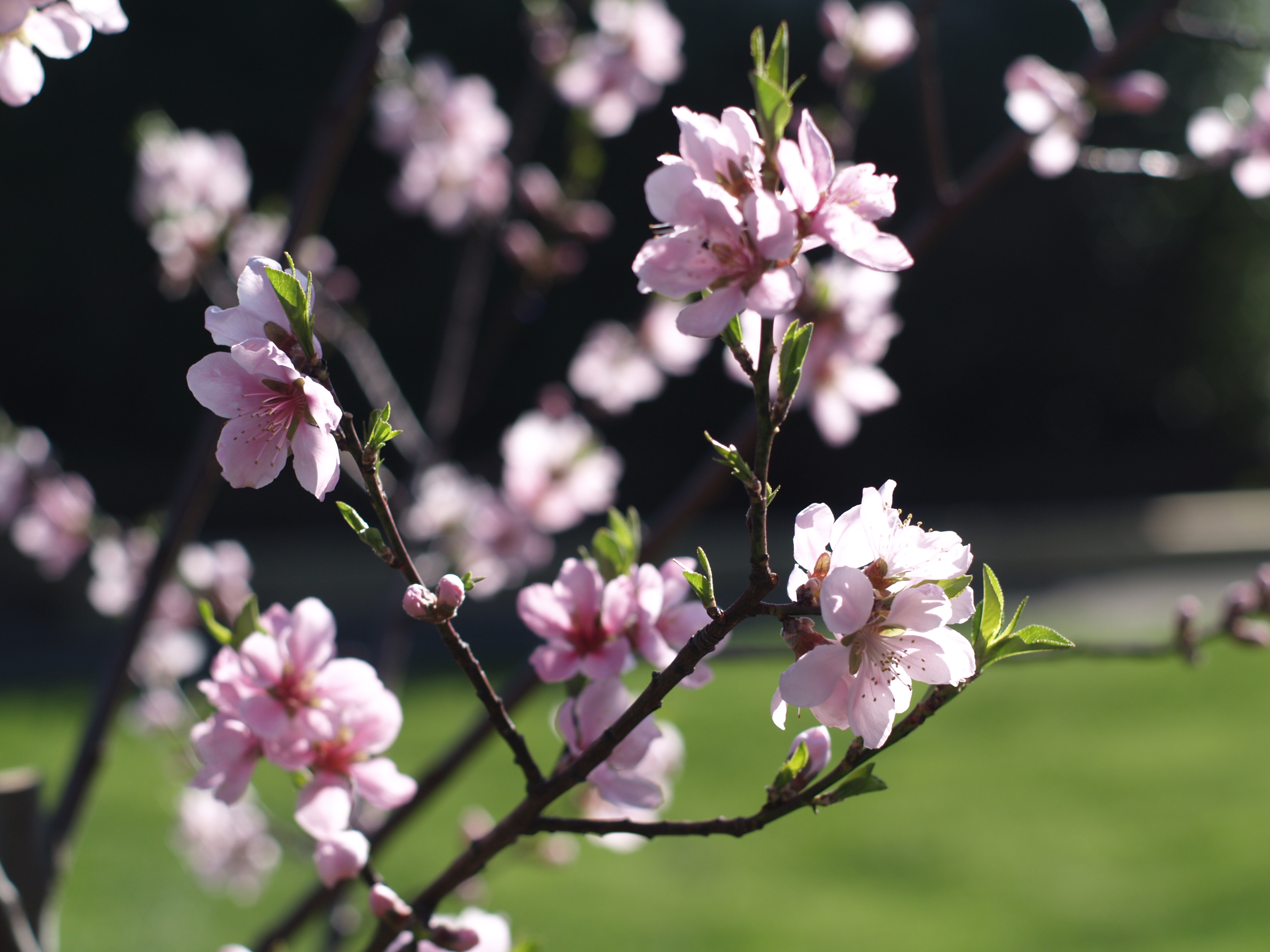
'Saturn' peach flowering mid-March.My 'Saturn' peach tree covered in garbage bags...ehhh?
So you get the picture— everything is at least a month ahead. This is not just in MI either; New York, Ohio, Indiana, and several other states are experiencing similar weather abnormalities. The rest of the season remains more unpredictable than ever. One thing that is certain, though, is that adaptability will be key to having a resilient food system under such adverse climatic conditions. When selecting fruit tree varieties it may be wise to choose cultivars with an array of different chilling hours, even in the north we may need to
New Plant Hardiness Map showing much of what used to be Zone 5 as Zone 6a.
consider low chill varieties at the current rate. Or, perhaps an opportunity exists to ‘push the zone’ by growing figs and Asian persimmons in MI. The most recent USDA PlantHardiness Map already reveals the shifting of zones. The Asian persimmon cultivar ‘Izu’ has lived for two seasons now in my unheated hoophouse. Maybe one day it’ll reach fruition! These are ideas worthy of consideration, but don’t get overzealous and start planting citrus in your yard. I would love to hear other people’s experiences so far this season. Hopefully the weather hasn’t wreaked too much havoc on your plantings!
One of my favorite things about fall is enjoying all of the wonderful autumnal fruits. Eating fresh apples and drinking cider is reminiscent of a breezy fall day. However, most people don’t think of pawpaws as being one of autumn’s many delights. In fact, the majority don’t even know what pawpaws are! Read my previous post and watch the video on eating fresh pawpaw fruit to find out more.
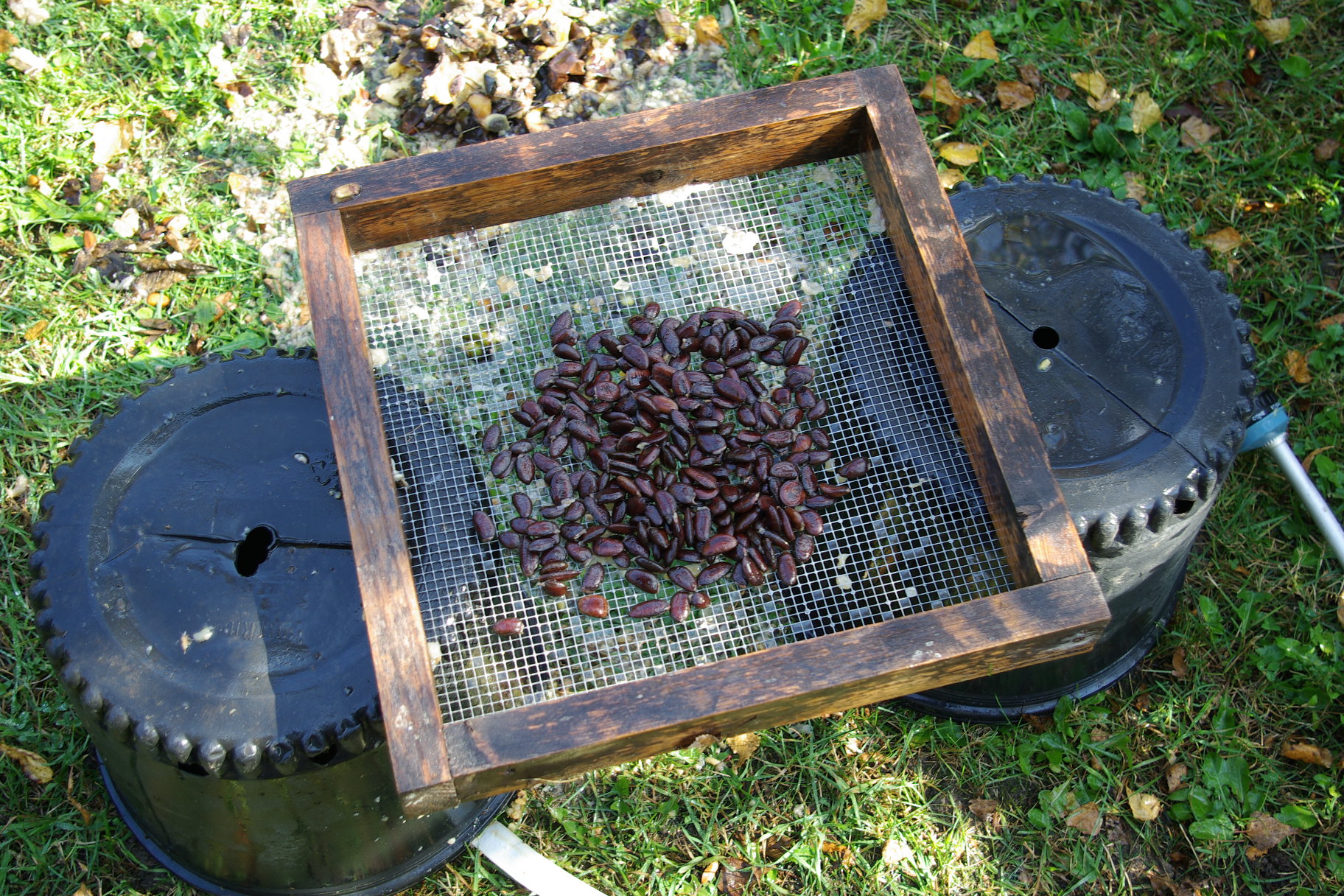
Anyone who enjoys a fresh pawpaw will discover several brownish-black, lima bean shaped seeds which fill the interior. These seeds are inedible to humans and most mammals. A good pawpaw, and especially improved selections, will have a low seed to pulp ratio. After eating a few pawpaws you will have accumulated a fair amount of seed. But what can they be used for? Well, aside from making beautiful jewelry(something we’re experimenting with!), pawpaw seeds can be used to propagate new trees! Since fresh pawpaw fruit is rarely found commercially, the best way to obtain the fruit is by planting a few trees in your yard. The trees are readily available in the nursery trade, but growing your own from seed is an exciting challenge to take on, and its a great project for kids! Pawpaw trees grown from seed can take anywhere from 5-10 years to reach fruition.
If you’re interested in propagating pawpaw trees in some quantity, then you’ll need an efficient way of extracting the seeds. If you’re only going to grow a few trees, then simply extract the seed with your teeth as you indulge. What follows is a brief tutorial on how to extract pawpaw seed en masse. This method can be scaled up or down as needed.
Step #1
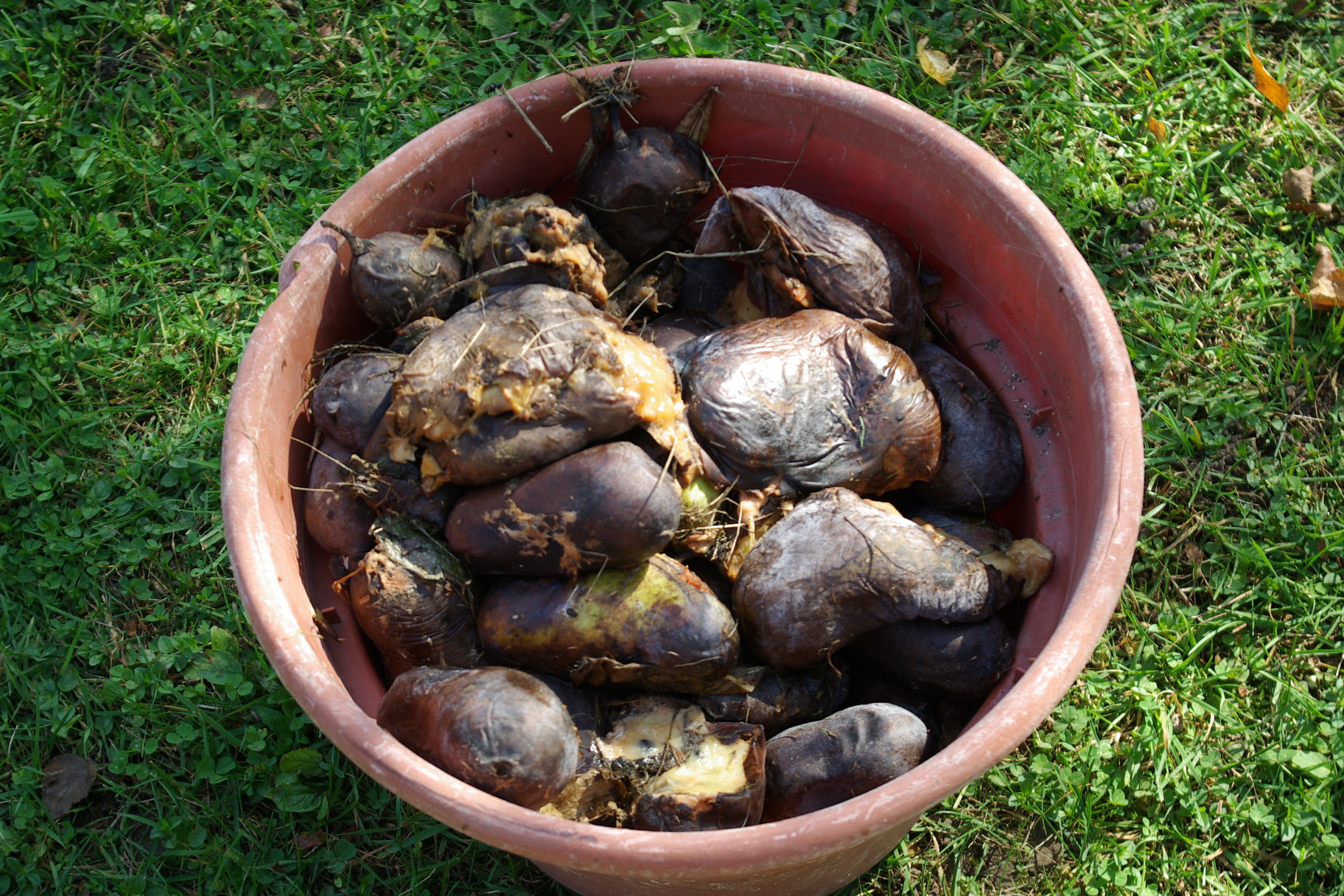
Start with a bucket full of pawpaw fruit, you can use ripe fruit, or overripe and rotten fruit. If you’re using high quality ripe fruit then make sure you save the pulp. For this technique you will need several pawpaws, a hose, two pots or buckets, and a mesh screen(1/4″ stainless steel works well). As a warning- pawpaw fruit is attractive to flies, and if kept indoors they will inevitably attract a lot of fruit flies!
Overripe pawpaw fruit used for seed extraction.
Step #2
First set screen between two upside down pots or 5 gallon buckets, so that the screen is elevated and the pulp can come out beneath it. Slip pawpaw pulp and seeds out of skins onto screen. When using overripe fruit the skins come off easily. If you have a lot of pawpaws, then do them in batches and only cover the screen about 3/4 with pulp. Too much pulp at once will make it difficult.
Pulp and seeds removed from skins and placed on screen.
Step #3
Now that you’ve placed your pulp and seeds on the screen, begin to rub against the screen while spraying the pulp with a hose gun (shower and flat settings work well). Continue to irritate the mixture while spraying to assist in pushing the pulp through the screen.
A combination of rubbing and spraying pushes the pulp through the screen.
Step #4
Pawpaw seeds come encased in a thin gelatinous membrane which protects the seeds and facilitates germination in the wild. However, for our purpose we want to remove these membranes. You will know you’ve rubbed the seeds clean once they’re free of the membrane. Eventually you’re left with almost entirely clean seed which can be soaked in warm water for ten minutes or so to remove any excess pulp or membrane. Once you’ve completed the process you’ll need to store the seeds immediately without letting them dry out (tutorial coming soon).
Try using pawpaw seeds for arts and crafts or jewelry making! Finished pawpaw seeds ready for storage.
Seed extraction is just the first step in the process. Stay tuned for upcoming articles on storing and stratifying pawpaw seed, and processing pawpaw pulp for eating. I hope this article has been helpful to you; feel free to ask questions and give feedback!
Asimina triloba, more commonly known as ‘pawpaw’, is a medium sized tree that produces the largest fruit indigenous to North America with individual fruits weighing up to a pound! Aside from their large size, they possess many potent nutritional qualities and have a truly delectable, somewhat tropicalesque flavor. I learned about pawpaws several years ago, and every fall since then I’ve happily indulged in their lusciousness. This season I was fortunate enough to harvest pawpaws en masse from a friend’s orchard, and make the fruit available at the local farmer’s market. A research report will soon be available on The Fruit Nut, which will provide information on marketing pawpaw fruit commercially. Also, check back soon for a series of articles on harvesting pawpaw seed, storing seed, and processing fresh pawpaw fruit. For now, enjoy the video!!!























 The Fruit Nut