What did you CHE!?

I first learned of Cudrania tricuspidata aka Chinese mulberry, or CHE, several years ago when reading Uncommon Fruits For Every Garden by Lee Reich. Most midwesterners are familiar with osage orange, which was commonly planted as a living fence on old farmsteads. Its relative che, however, differs in that it produces an edible fruit which resembles the brain-like fruit of the osage orange, but is about 3-4x smaller and a pinkish-salmon color. Being a nut for exotic and unusual fruits, I had to get a che tree growing in my orchard. And so I did. Three years later its about 6-7′ tall and has yet to bear. I patiently await the day I can finally taste the mysterious che fruit! I have heard different reports in regards to flavor, but some claim it tastes like a mixture of watermelon and fig. Yum…

Photo courtesy http://www.eat-it.com

Michael McConkey of Edible Landscaping is one of the few nurserymen to sell che trees. Here is a great video of Michael with his seedless che tree:


Keith Johnson of Permaculture Activist wrote an informatve article on che a few years ago. After revisting his article I thought it’d be a good idea to share it. So here it is:

Che, eh? Mmmm. Nom nom.

By Keith Johnson

This odd fruit, Cudrania tricuspidata (which in this image seems under ripe or a different variety than mine), is presently (Fri Sept 5, 09) yielding (finally) beautifully, abundantly and deliciously in my USDA Zone 6a-b ridge-and-valley landscape in Southern Indiana (a quarter century ago it used to be Zone 5) in heavy clay and (this year) a wet season (with a three week drought in late Aug through recently). It seems to be resistant to pests, the birds have tasted it (must observe more) and there are at least 200, inch-to-inch-and-a-half, fruits with about half of them ripe at the moment. About 50 taste testers at recent party said it reminded them “melon”, “mulberry” and “fig” (it is related to the latter two) and generally enjoyed it. It’s six years old, was transplanted here from W. NC, three years ago, and it lived at least its first year in a pot. I’d say that indicates sturdiness.My thornless cultivar is grafted onto an Osage orange seedling. I recommend it highly. You can buy it (where I did) at Edible Landscape in VA.

Moraceae; Common Names: Che, Chinese Che, Chinese Mulberry, Cudrang, Mandarin Melon Berry, Silkworm Thorn.
Distant Affinity: Breadfruit (Artocarpus altilis), Jackfruit (A. heterophyllus), Fig (Ficus spp.), Mulberry (Morus spp.), African Breadfruit (Treculis africana).
Origin: The che is native to many parts of eastern Asia from the Shantung and Kiangson Provinces of China to the Nepalese sub-Himalayas. It became naturalized in Japan many years ago. In China, the leaves of the che serve as a backup food for silkworms when mulberry leaves are in short supply. The tree was introduced into England and other parts of Europe around 1872, and into the U.S. around 1930.
Adaptation: The che requires minimal care and has a tolerance of drought and poor soils similar to that of the related mulberry. It can be grown in most parts of California and other parts of the country, withstanding temperatures of -20° F.

DESCRIPTION

Growth Habit: The deciduous trees can eventually grow to about 25 ft. in height, but often remains a broad, spreading bush or small tree if not otherwise trained when they are young. Immature wood is thorny but loses its thorns as it matures. Female trees are larger and more robust than male trees.

Foliage: The alternate leaves resemble those of the mulberry, but are smaller and thinner and pale yellowish-green in color. The typical form is distinctly trilobate, with the central lobe sometimes twice as long as the lateral ones, but frequently unlobed leaves of varied outlines are also found on the same plant. As the plant grows, the tendency seems towards larger and entire leaves, with at the most indistinct or irregular lobing. The general form of the leaves comprise many variations between oblong and lanceolate. The che leafs and blooms late in spring–after apples.

Flowers: The che is dioecious, with male and female flowers on different plants. Appearing in June, both types of flowers are green and pea-sized. The male flowers turn yellow as the pollen ripens and is released, while the wind-pollinated female flowers develop many small stigmas over the surface of the immature fruit. Male plants occasionally have a few female flowers which will set fruit.

Fruit: Like the related mulberry, the che fruit is not a berry but a collective fruit, in appearance somewhat like a round mulberry crossed with a lychee, 1 to 2 inches in diameter. The ripe fruits are an attractive red or maroon-red color with a juicy, rich red flesh inside and 3 to 6 small brown seeds per fruit. The flavor is quite unlike the vinous quality of better mulberries. While still firm they are almost tasteless, but when fully soft ripe they develop a watermelon-like flavor that can be quite delicious. The sugar content is similar to that of a ripe fig. In colder areas with early leaf drop the bright red fruit are an attractive sight dangling from smooth, leafless branches.

May in March!

The month of March is concluding; and it was a wild one at that. Global warming, or more accurately ‘global weirding’, is not only evident but now fully apparent after a winter with record low snowfall and unusually high temperatures. Earlier this month there were two weeks of unseasonably warm 70 and 80 degree weather, yes 80 degrees in March. The common folk may relish in this warmth, but any gardener, farmer, or orchardist

Frost on lemon balm after two weeks of 70-80 degree temps.

understands the multitude of implications. One night last week the temps dipped down into the high twenties. Whats wrong with that, those are usual March conditions, right? Well yes, but remember that two week period of 70 and 80 degree temps? Those warm days triggered local flora to ‘go for it’…inducing extremely early blossoming and bud break on many trees. Some of these trees being cornerstones for local economies. Stone fruits(peaches,plums,cherries,etc.) were particularly premature in blooming. Their blossoms are very tender and cannot withstand frost. There you have it, confused trees put out flowers and then got zapped by the cold. The cherry industry in the Traverse Bay area took a hard blow; a friend reports that the entire crop for 2012  could be in the red…except not with plump, juicy cherries! Another reason not to put all your eggs in one basket. The only potential saving grace for these cherry farmers is the fact that the high winds associated with the cold temps inhibit frost from settling. Conventional farmers combat this with giant fans or ‘smudge pots’ (oil burning devices used to increase air temps ever so slightly) throughout the orchard. However, for most small farmers this is too costly and labor intensive. On a home scale it is much easier to protect plants from frost. Simply draping a tarp or blanket atop vulnerable specimens will help to prevent frost contact. The hardy kiwi vines in my garden did not appreciate the frost. They didn’t have flowers but they had leaves. Key word ‘had’. Even with protection the leafed-out hardy kiwi vines could not take the cold temps. Fortunately they will happily leaf out again when the conditions become favorable. Fingers are crossed that the apples will be okay. Some varieties are at

Some apple buds already at the pink stage. 3/28/12

the tight cluster or pink stage which means flowers could open up any day. We’re not in the clear yet. A year with no cyder would be a shame indeed, but who knows maybe it will be just as bountiful a season as last for apples. Another factor that influences successful fruit set is the presence of pollinators. Under cold temps most pollinator species haven’t become fully active yet. Even wild edibles like stinging nettle and cattail are way ahead of their normal growth cycle. Fortunately there isn’t nearly the risk with these guys. The wise gardener knows not to put out tomato seedlings because one week of 70 degree temps in March. This would be foolish. However, I did take a risk by direct seeding some bush beans in my greenhouse during the warm spell. Hopefully they’ll be okay. Not much to lose there, though.

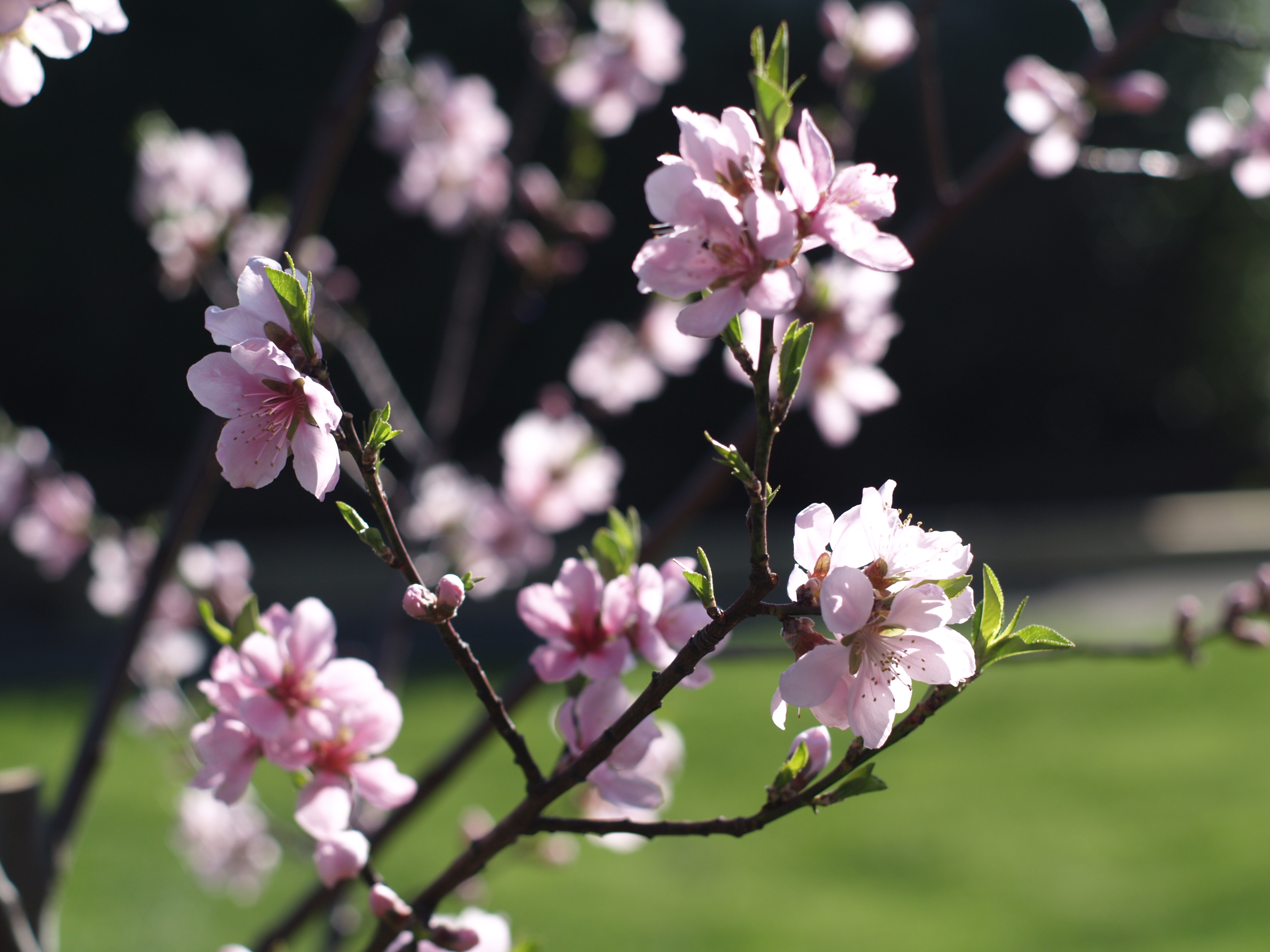
'Saturn' peach flowering mid-March.
My 'Saturn' peach tree covered in garbage bags...ehhh?

So you get the picture— everything is at least a month ahead. This is not just in MI either; New York, Ohio, Indiana, and several other states are experiencing similar weather abnormalities. The rest of the season remains more unpredictable than ever. One thing that is certain, though, is that adaptability will be key to having a resilient food system under such adverse climatic conditions. When selecting fruit tree varieties it may be wise to choose cultivars with an array of different chilling hours, even in the north we may need to

New Plant Hardiness Map showing much of what used to be Zone 5 as Zone 6a.

consider low chill varieties at the current rate. Or, perhaps an opportunity exists to ‘push the zone’ by growing figs and Asian persimmons in MI. The most recent USDA Plant Hardiness Map already reveals the shifting of zones. The Asian persimmon cultivar ‘Izu’ has lived for two seasons now in my unheated hoophouse. Maybe one day it’ll reach fruition! These are ideas worthy of consideration, but don’t get overzealous and start planting citrus in your yard. I would love to hear other people’s experiences so far this season. Hopefully the weather hasn’t wreaked too much havoc on your plantings!

The Holistic Orchard: Growing Tree Fruit and Berries the Biological Way

Michael Phillips, the author of The Apple Grower, recently released his latest book titled The Holistic Orchard: Growing Tree Fruits and Berries the Biological Way. After purchasing this newly published book I’ve struggled to set it down!  Phillips presents an approach to orcharding that extends beyond the realms of organic agriculture into the ideas of maintaining and vitalizing the health of the entire ecosystem— the trees, the bees, the fungi, and all other organisms. He analogously compares conventional and organic practices to allopathic medicine, whereby symptoms are treated instead of root causes. Alternatively, the holistic approach seeks to involve the whole system and discover underlying reasons for systems problems such as pest or disease outbreaks. You can think of it as antibiotics vs. probiotics. Antibiotics kill and eliminate problem-areas where probiotics encourage increased health of the whole organism as preventative means for reducing disease onset. By employing a slew of practices such as  applying herbal foliar sprays(‘tree probiotics’) and maintaining high levels of woody organic matter VIA ramial woodchips, Phillips has developed a way to grow nutrient-dense, tasty fruit without the use of any toxic pesticides, herbicides, or fungicides. You can buy the book and learn more at Michael’s website: www.herbsandapples.com. For now, check out the following videos of Michael explaining his exciting work:

Lost Nation Orchard – the Holistic Approach from Chris Conroy on Vimeo.

Lost Nation Orchard – Groveton, NH from Chris Conroy on Vimeo.

Golden Raspberry Video

The season is winding down and winter will soon bare it’s grip here in SE Michigan. However, one thing in the garden which continues to produce are the golden raspberries. It’s especially delightful to bite into a plump, sweet raspberry this late in the season; most small fruits and berries have become a distant memory of summer and a reminder of the cold months ahead as they sit on the storage shelves in the form of jam, jelly, and fruit leather.
The ability to fruit on primocanes means that, if allowed, golden raspberries will produce a crop throughout much of the season all the way into the fall. Find out more about this in a previous post on golden raspberries, but for now enjoy the video clip!

Processing Pawpaws for Seed

One of my favorite things about fall is enjoying all of the wonderful autumnal fruits. Eating fresh apples and drinking cider is reminiscent of a breezy fall day. However, most people don’t think of pawpaws as being one of autumn’s many delights. In fact, the majority don’t even know what pawpaws are! Read my previous post and watch the video on eating fresh pawpaw fruit to find out more.

Anyone who enjoys a fresh pawpaw will discover several brownish-black, lima bean shaped seeds which fill the interior. These seeds are inedible to humans and most mammals. A good pawpaw, and especially improved selections, will have a low seed to pulp ratio. After eating a few pawpaws you will have accumulated a fair amount of seed. But what can they be used for? Well, aside from making beautiful jewelry(something we’re experimenting with!), pawpaw seeds can be used to propagate new trees! Since fresh pawpaw fruit is rarely found commercially, the best way to obtain the fruit is by planting  a few trees in your yard. The trees are readily available in the nursery trade, but growing your own from seed is an exciting challenge to take on, and its a great project for kids! Pawpaw trees grown from seed can take anywhere from 5-10 years to reach fruition.

If you’re interested in propagating pawpaw trees in some quantity, then you’ll need an efficient way of extracting the seeds. If you’re only going to grow a few trees, then simply extract the seed with your teeth as you indulge. What follows is a brief tutorial on how to extract pawpaw seed en masse. This method can be scaled up or down as needed.

Step #1

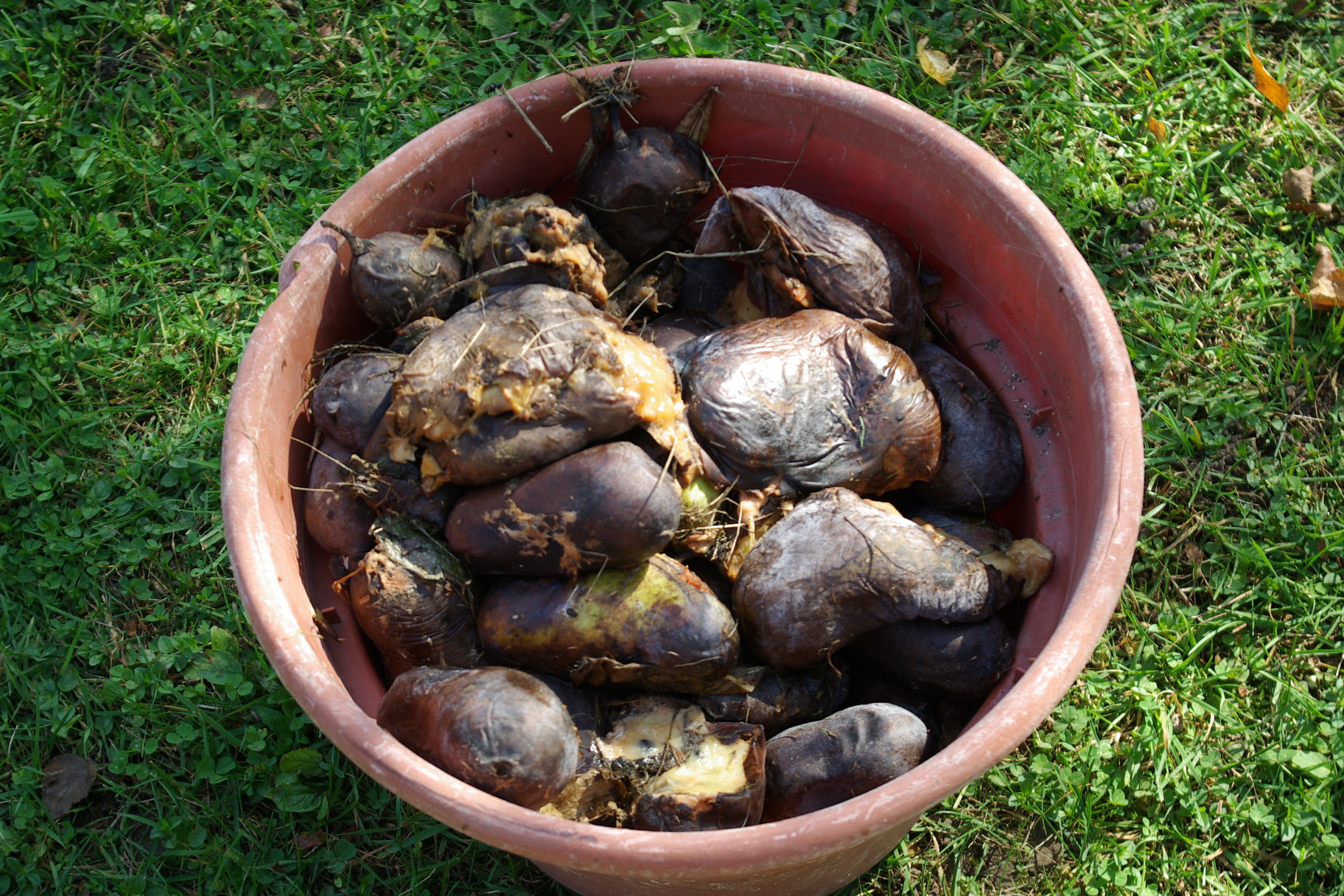
Start with a bucket full of pawpaw fruit, you can use ripe fruit, or overripe and rotten fruit. If you’re using high quality ripe fruit then make sure you save the pulp. For this technique you will need several pawpaws, a hose, two pots or buckets, and a mesh screen(1/4″ stainless steel works well). As a warning- pawpaw fruit is attractive to flies, and if kept indoors they will inevitably attract a lot of fruit flies!

Overripe pawpaw fruit used for seed extraction.

Step #2

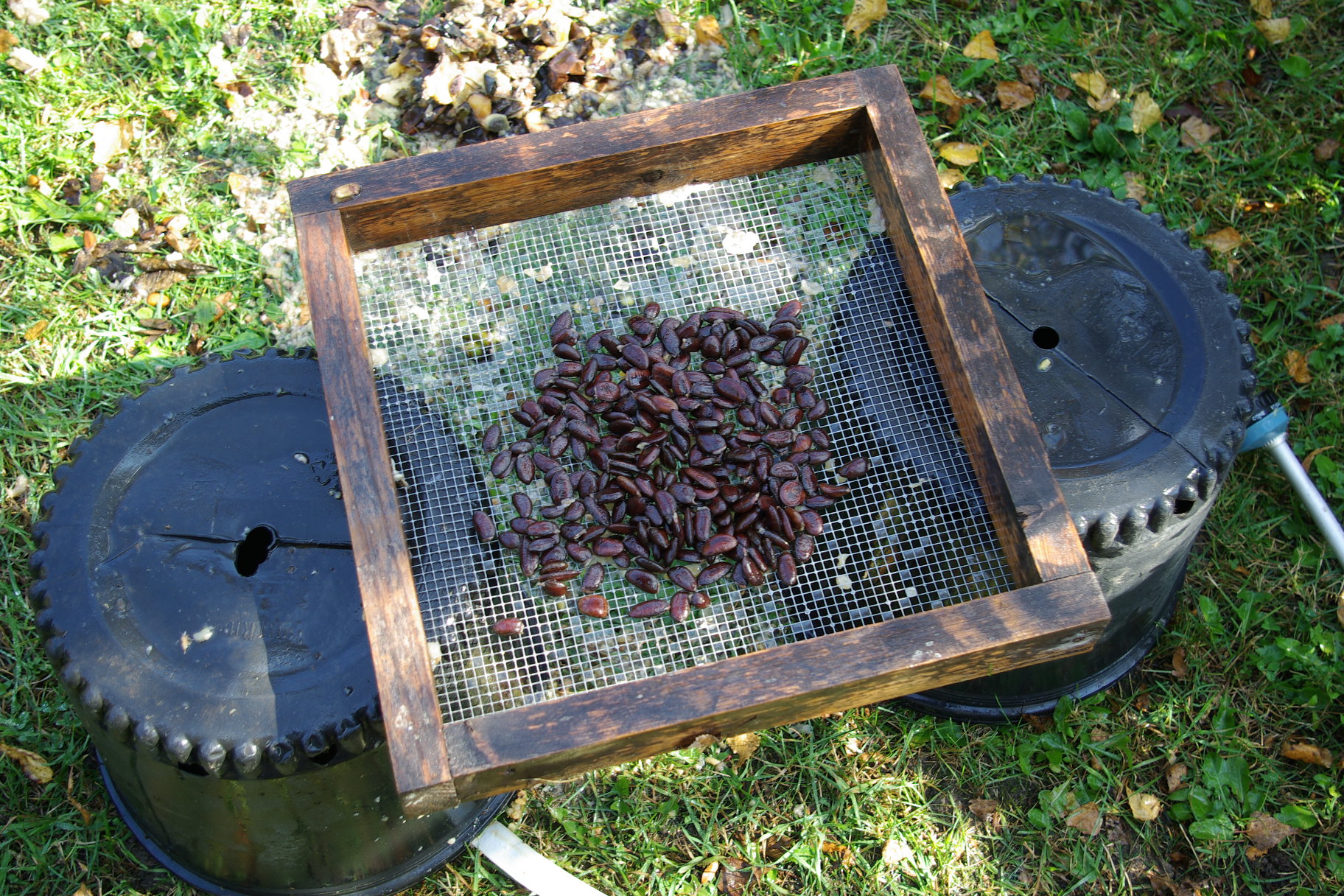
First set screen between two upside down pots or 5 gallon buckets, so that the screen is elevated and the pulp can come out beneath it. Slip pawpaw pulp and seeds out of skins onto screen. When using overripe fruit the skins come off easily. If you have a lot of pawpaws, then do them in batches and only cover the screen about 3/4 with pulp. Too much pulp at once will make it difficult.

Pulp and seeds removed from skins and placed on screen.


Step #3 

Now that you’ve placed your pulp and seeds on the screen, begin to rub against the screen while spraying the pulp with a hose gun (shower and flat settings work well). Continue to irritate the mixture while spraying to assist in pushing the pulp through the screen.

A combination of rubbing and spraying pushes the pulp through the screen.

Step #4 

Pawpaw seeds come encased in a thin gelatinous membrane which protects the seeds and facilitates germination in the wild. However, for our purpose we want to remove these membranes. You will know you’ve rubbed the seeds clean once they’re free of the membrane. Eventually you’re left with almost entirely clean seed which can be soaked in warm water for ten minutes or so to remove any excess pulp or membrane. Once you’ve completed the process you’ll need to store the seeds immediately without letting them dry out (tutorial coming soon).

Try using pawpaw seeds for arts and crafts or jewelry making!
Finished pawpaw seeds ready for storage.

Seed extraction is just the first step in the process. Stay tuned for upcoming articles on storing and stratifying pawpaw seed, and processing pawpaw pulp for eating. I hope this article has been helpful to you; feel free to ask questions and give feedback!

Video: Eating Fresh Pawpaw Fruit

Asimina triloba, more commonly known as ‘pawpaw’, is a medium sized tree that produces the largest fruit indigenous to North America with individual fruits weighing up to a pound! Aside from their large size, they possess many potent nutritional qualities and have a truly delectable, somewhat tropicalesque flavor. I learned about pawpaws several years ago, and every fall since then I’ve happily indulged in their lusciousness. This season I was fortunate enough to harvest pawpaws en masse from a friend’s orchard, and make the fruit available at the local farmer’s market. A research report will soon be available on The Fruit Nut, which will provide information on marketing pawpaw fruit commercially. Also, check back soon for a series of articles on harvesting pawpaw seed, storing seed, and processing fresh pawpaw fruit. For now, enjoy the video!!!