Heeling-In Fruit Trees & Staking Grafts

Autumn is the ideal time to plant bare-root fruit trees. Once your trees have arrived from the nursery its best to get them in the ground ASAP. Sometimes this isn’t possible; this is when ‘heeling-in’ comes handy. Heeling-in is a technique used to store bare-root fruit trees temporarily until they’re ready to be planted. Its a simple procedure which basically entails digging a trench large enough to accommodate the roots of the tree, then placing the roots in the trench so the tree is almost laying on the ground, at about a 90 degree angle parallel to the ground. Fill in the hole with soil so the roots are entirely covered.

Situate roots in trench so they’re not circling.
Fill in trench and tamp down soil firmly over the roots of your bare-root tree.

Its best to do this in a shadier spot to prevent drying out. Bare-root trees are incredibly sensitive to drying out and they need to be treated with care. Don’t wait too long to heel in your trees if you’re not ready to plant them right away. Trees should generally not stay heeled-in for more then a month or two. With that being said I have managed to forget about heeled-in trees only to find them a season later well rooted with new growth. Don’t do this. Most of the time, however, I heel-in trees for a 1-2 week period until planting day.

One of the most exciting and interesting parts about gardening is you’re always learning something new. Each season new lessons are learned and knowledge is further refined. Its a never-ending learning process. As the garden grows so does the gardeners wisdom. This is experiential knowledge and distinguishes really knowing something versus just thinking something to be true. This year I learned something valuable about topworking trees. ‘Topworking’ refers to grafting high up in mature trees. This may be to switch over a variety or to add more varieties to a tree. I did a lot of apple tree topworking last spring. When grafting onto mature roots first year graft growth can be astonishing…and sometimes too vigorous. I’ve seen apple grafts grow 4+ feet in one season, same for persimmon and chestnut. That can be a big burden for a barely-healed graft union. While walking around the chestnut orchard at Nash Nursery a couple weeks ago I found a clever system they’d devised for staking 1st year grafts. This video shows that system:

Seeing these staked grafted was an Ah Ha! moment for me…thinking back to those apple trees I’d topworked last spring I’d realized this is what they needed. Just a couple days ago when walking through the orchard I came across one of the most successful topworking jobs from last spring…only to find one of the grafts had snapped off!  Needed those stakes…
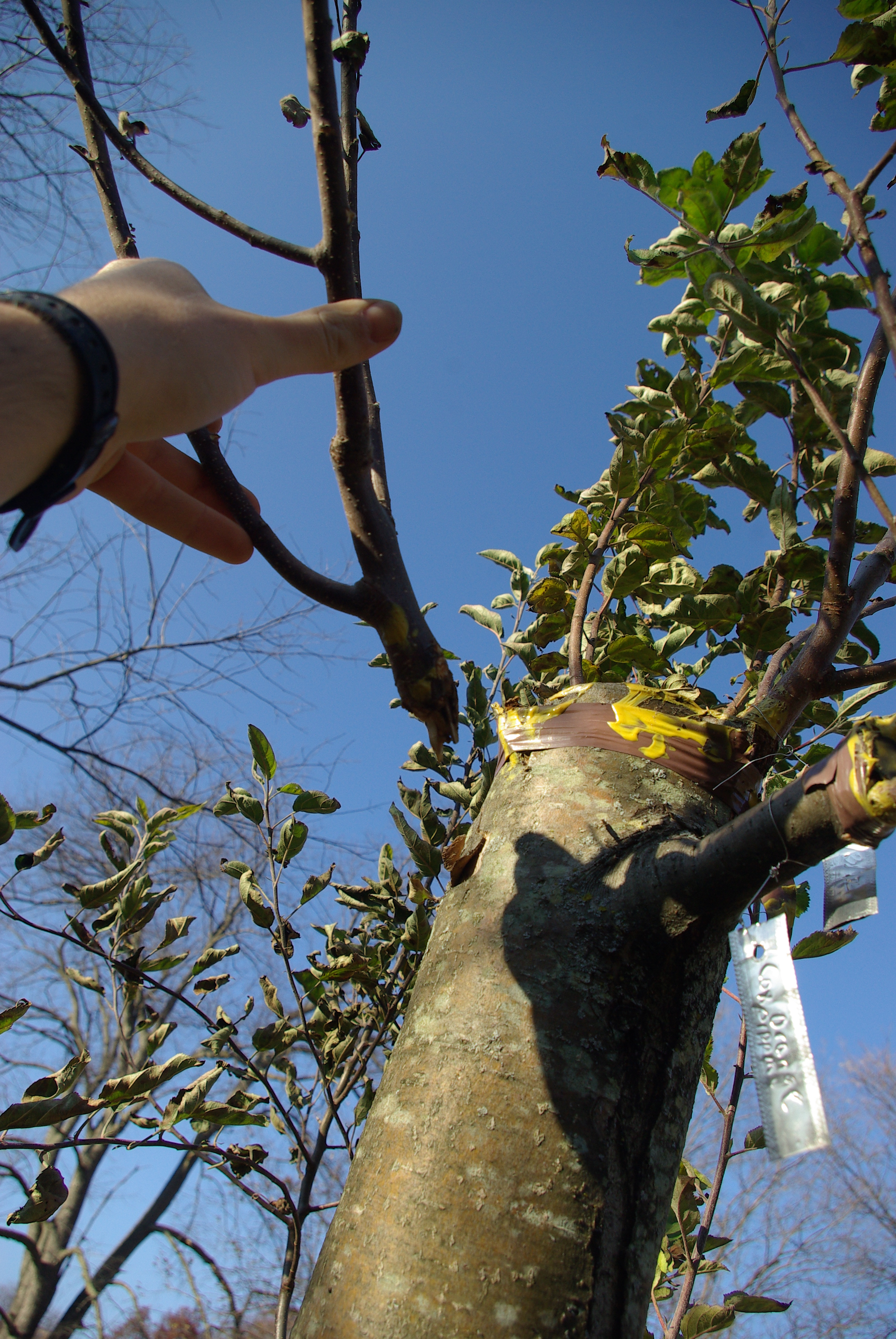
Fortunately these bark grafts were done in fours on each limb to ensure at least one success.

Staking is good not only for providing structural support but also for directional training. From what I’ve seen these grafts want to grow vertically…staking them at desired angles and directions could be beneficial.


Fall Closure, Garden Update, & New Podcast

Winter is coming and you can feel it in the air. While Hurricane Sandy was wreaking havoc on the east coast Michigan got hit with serious winds, heavy rain, and some hail. That storm swooped away the remaining tree leaves bringing a conclusion to the beautiful display of fall colors. Now the bareness is kicking in. I’ve been struggling to find time to write amongst the busyness of closing down the gardens and getting everything ready for winter. You have to make hay when the sun shines- soon enough we’ll be snowed in.

A LOT has been going on, though. Many renovations  have been made in the garden/orchard as well as some new plantings. My company has been doing well this fall and we’ve hosted some exciting workshops and secured some enthusiastic new clients that are ready to take on and transform their own landscapes. The elections have just passed, thankfully, and obviously everybody has their different views on voting…but we can all use this time as a reminder that perhaps the most effective way to vote and cast your voice is with your everyday actions. ‘Vote with your dollar’ is a powerful saying. We all have an opportunity to be the change we wish to see. Make positive changes in your own community, small or large.

Thats a wrap for my political rant; this is after all a website about fruit and orcharding, not politics. I vote for apples. Speaking of apples, I just finished the latest episode of the The Fruit Nut Podcast with Michael Phillips, the author of The Apple Grower and The Holistic Orchard. It was a great conversation and Michael shared so much valuable information. We talked about holistic fruit tree care, community orchards, and more. CLICK HERE to listen to the interview. Unfortunately the past three episodes have been recorded with a low quality microphone so the audio on my end breaks up a lot and doesn’t sound that great. HOWEVER, I am investing in a new recording system to produce much cleaner audio. Look forward to episode 4 with Lee Reich.

Here are some recent photos of field trips, events, and happenings in the garden…

Spacing out blueberries for the new blueberry bed. 10/9/12
Planting potted blueberries in the ground. 10/9/12
Vibrant blueberry fall color. 10/17/12
Sheet mulched blueberry bed complete…ground level rose some 10″. Organic matter is the name of the game when it comes to blueberries! 10/27/12
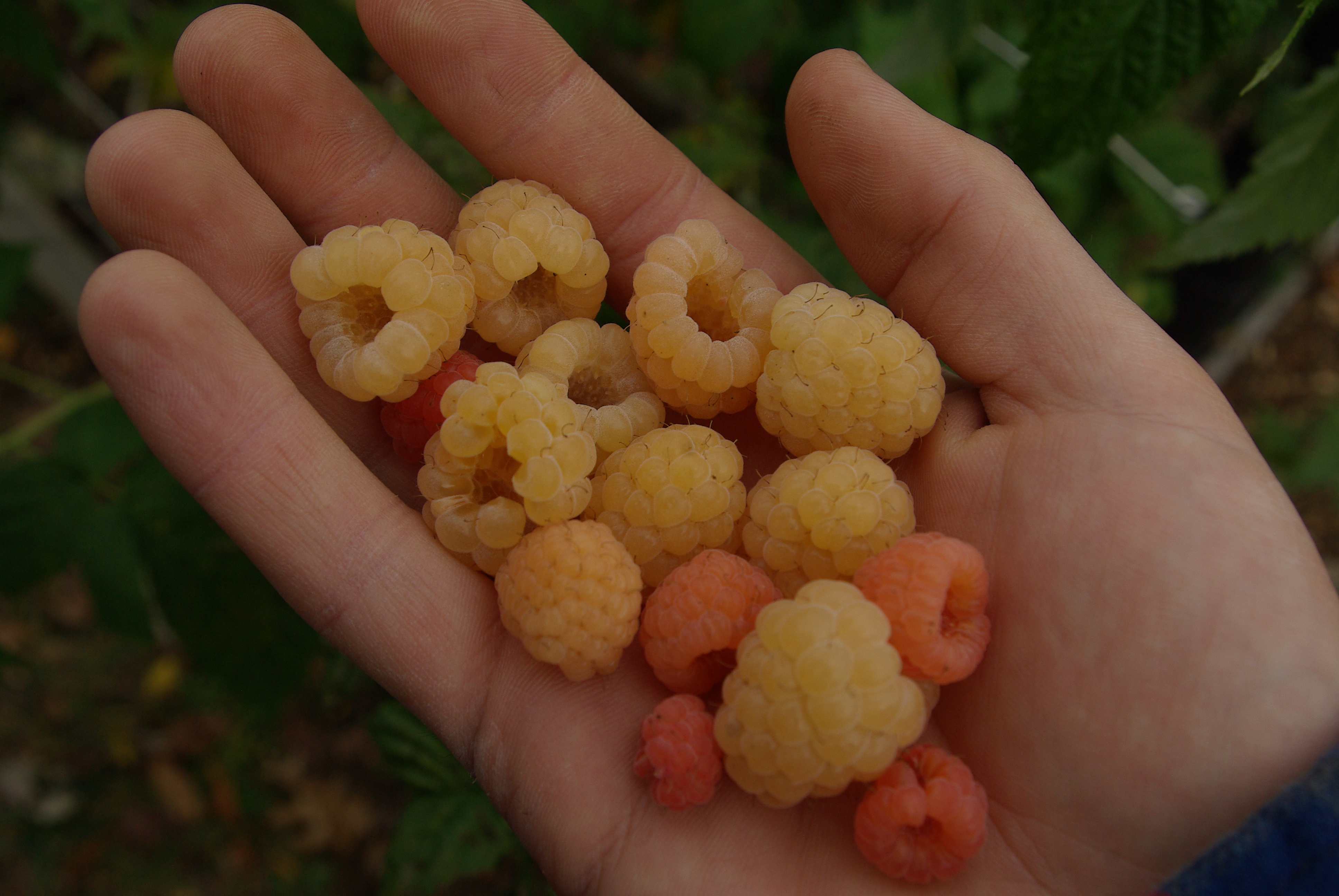
Golden raspberries are best when the weather gets cold and sugar levels increase. 10/27/12
Giant daikon radish doing it’s work building soil at a client’s site in Plymouth, MI.
Mike Levine of Nature and Nurture sharing the remains of his hardy kiwi crop.
This was my first time eating fresh hardy kiwi…I’ve hard store bought but these put ’em to shame!
These little kiwis are extremely sweet with a complex flavor. They have smooth skin and can be eaten whole…much tastier then fuzzy kiwis in my opinion. Plus they can grow in zone 5!
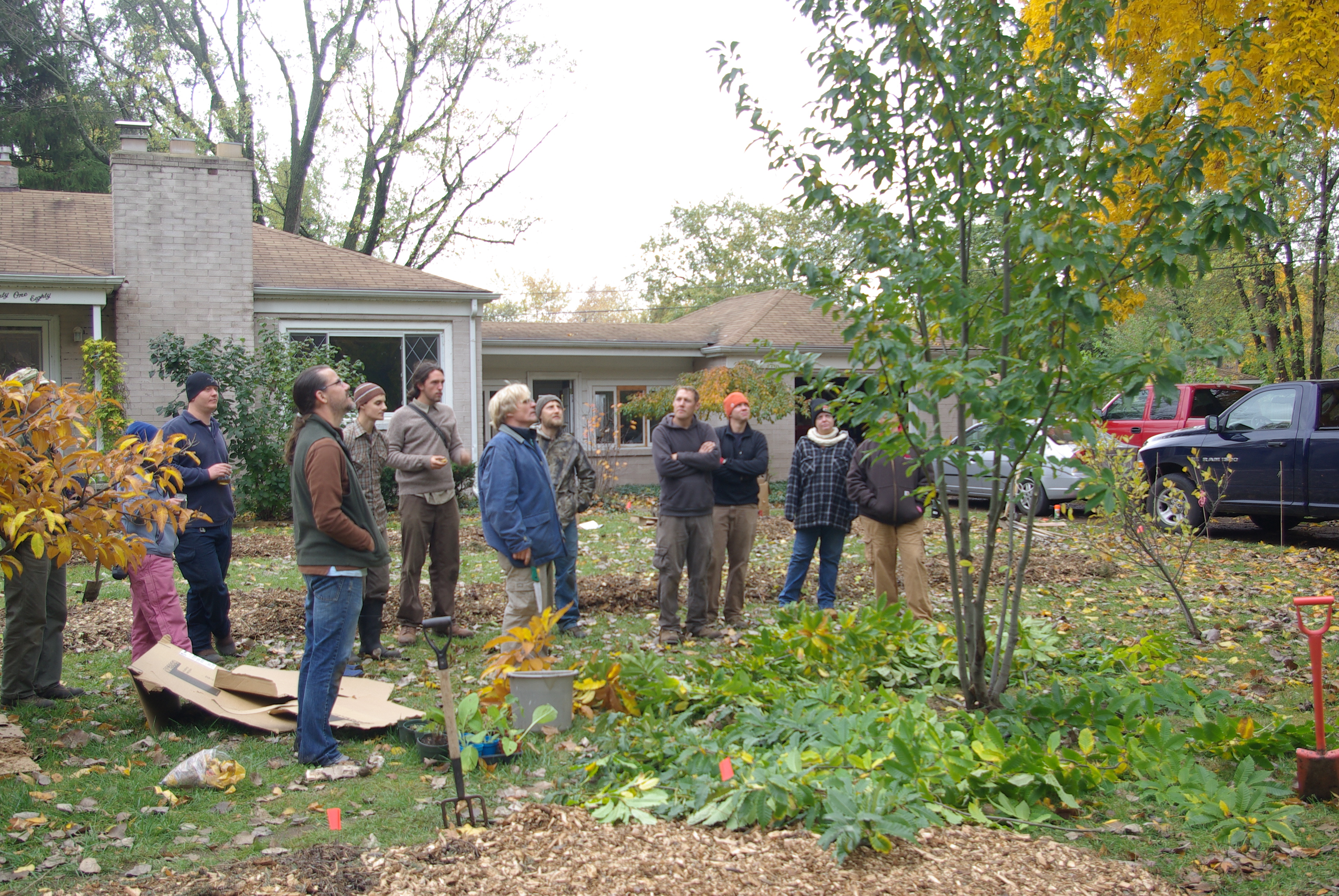
Ken Asmus of Oikos Tree Crops shares a lovely presentation at a recent Roots To Fruits edible forest gardening weekend intensive. 10/20/12


Ken talking chestnuts and explaining the benefits of ‘rough mulch’ in an orchard setting. This means leaving pruning in place beneath the tree they came from. Nutrient cycling at it’s finest…
Ken and I feeling accomplished after leading a successful edible forest gardening workshop. Beautiful hickory color in background. Photo courtesy PJ Chmiel
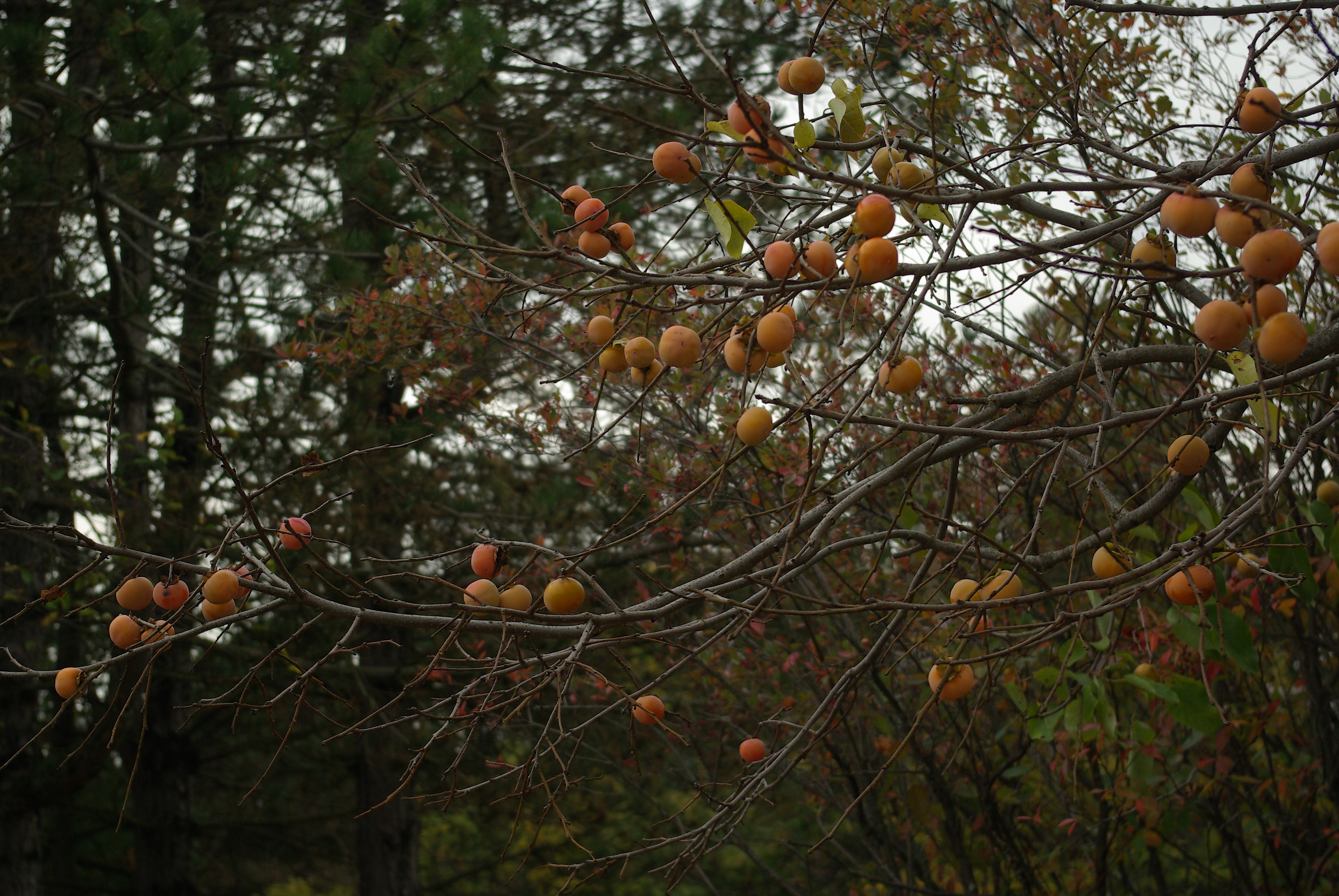
‘I-94’ American persimmons tree ripening at Nash Nursery in Owosso, MI. 10/13/12
Ripe ‘I-94’ American persimmons…this variety comes from the breeding work of the late James Claypool.
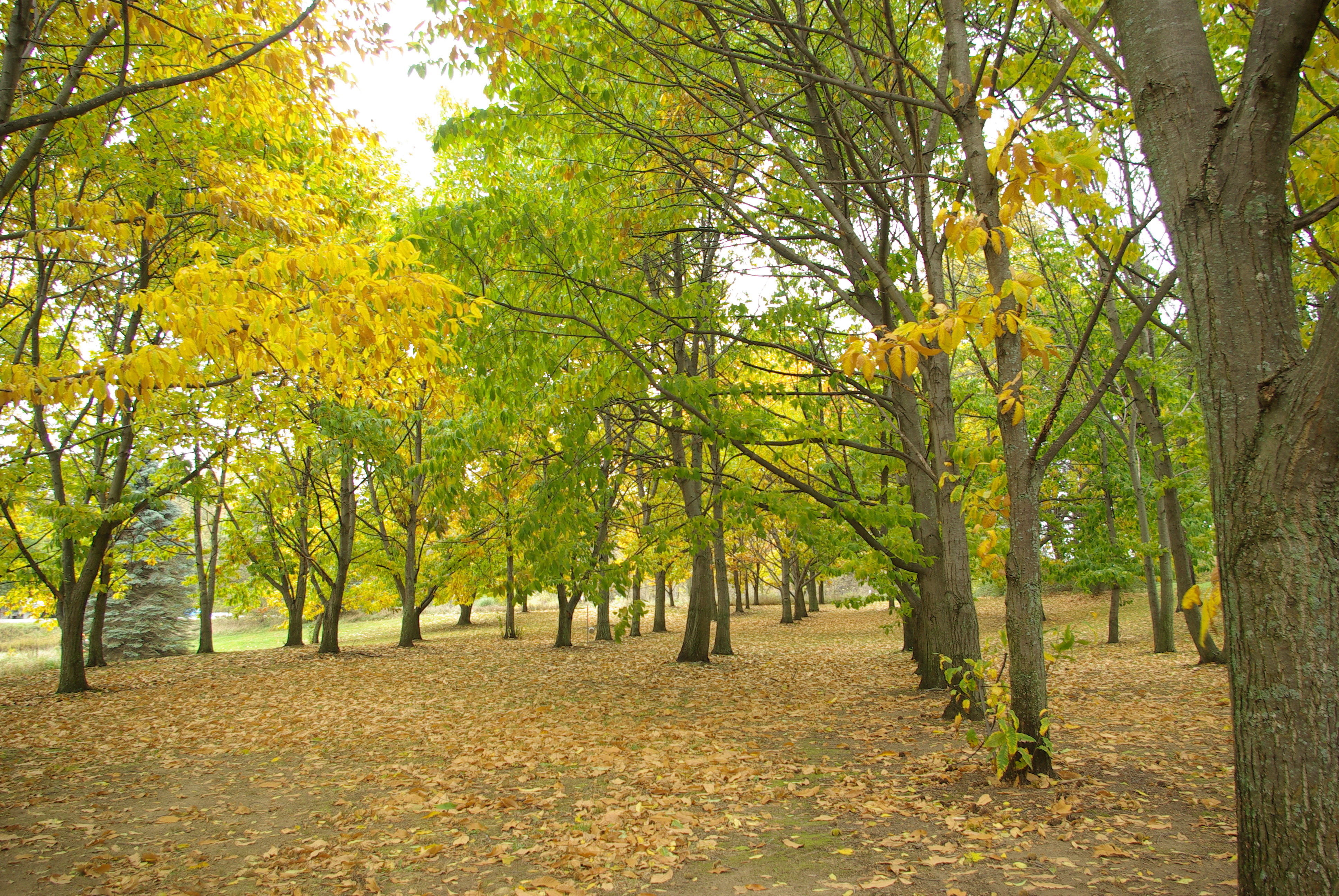
Beautiful stand of pure American chestnuts growing free of blight in Owosso, MI. These were planted some 30+ years ago. 10/13/12
Elegant variegated silverberry, E.pungens… 11/7/12
New seedling persimmon planting from a seedling tree grown from ‘Morris Burton’ fruit. The parent tree had lovely deep red, very sweet fruit. 11/7/12
Latest persimmon planting featuring several grafted D. virginiana varieties. More on this later…